🦪 AI-Powered Pearl Identification

Pearl Identifier —
Natural, Cultured, or Imitation?

Upload a photo of your pearl, pearl necklace, or pearl jewellery. Our AI assesses luster, surface quality, nacre depth, shape, and colour to identify the pearl type — distinguishing natural from cultured from imitation — and gives you a complete grading overview in seconds.

Free · No sign-up Natural, cultured & imitation All pearl types covered 7-factor grading overview Results in seconds

What You Get in Every Result

  • Pearl type — natural, cultured, or imitation
  • Confidence percentage with visual reasoning
  • Pearl variety — Akoya, South Sea, Tahitian, Freshwater, Baroque
  • Luster quality assessment — Excellent / Very Good / Good / Fair
  • Surface quality and nacre depth indication
  • Shape grade — Round, Near-Round, Oval, Baroque, Drop
  • Overtone and body colour description
  • Estimated collector or retail value range
  • Care instructions and authenticity next steps
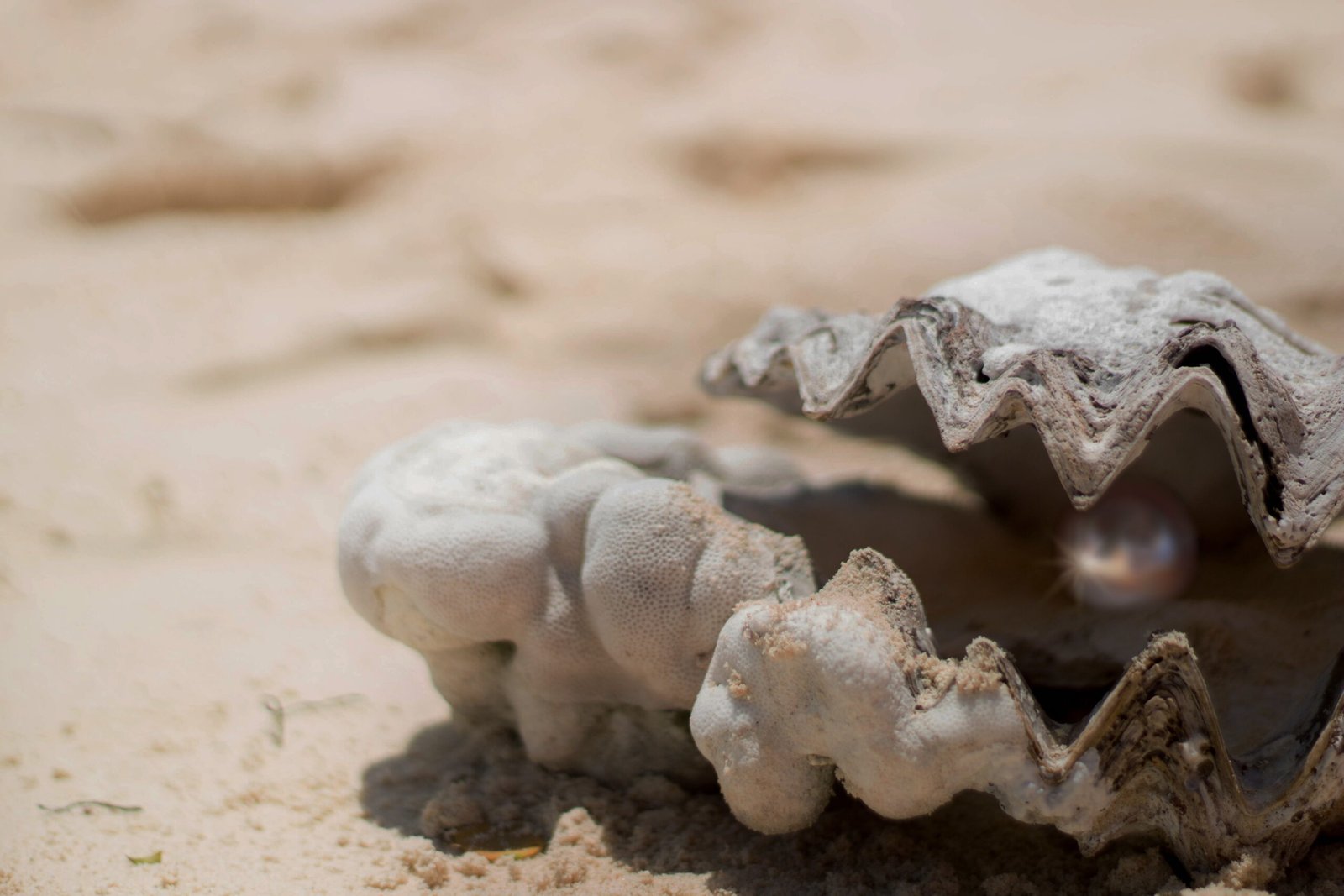
pearl identifier

Pearl Identifier

Identify any pearl or pearl-like specimen

Drag & drop photos here

or click to browse

JPG, PNG, WEBP accepted

0 of 3 images added

Add details for better accuracy (optional)

Upload up to 3 angles for the most accurate result

Identification Confidence 0%

Low confidence — try uploading more angles or add details above.

Description

Origin / formation

Is Genuine

Variety

Origin Type

Luster Grade

Nacre Quality

Surface Grade

Overtone

Size Range

Rarity

Relative value

Notable localities / regions

Typical colours

Key properties

    Similar look-alikes

    Alternative identifications

    Authentication Tip

    Collector tip

    Natural, Cultured, and Imitation Pearls — The Critical Distinction

    The pearl market is divided into three fundamentally different categories, each with dramatically different values. Understanding which category your pearl belongs to is the most important single question in pearl identification — and it is one that even experienced jewellers sometimes get wrong without the right tools.

    Natural Pearl
    Formed entirely without human intervention
    Solid nacre throughout — no nucleus visible
    Extremely rare — less than 1 in 10,000 oysters
    Irregular shape more common than perfectly round
    Commands the highest value — often 10–100× cultured
    Requires X-ray to confirm — no visible nucleus
    Cultured Pearl
    Formed with a bead or tissue nucleus implanted by humans
    Genuine nacre coating over a bead nucleus
    Accounts for nearly all commercially sold pearls
    Nacre thickness varies — thin nacre reduces value
    High quality cultured pearls are genuinely beautiful
    Nucleus sometimes visible at drill hole with magnification
    Imitation Pearl
    No nacre whatsoever — glass, plastic, or shell coated
    Coating wears off at drill holes revealing base material
    Too-perfect shape and uniformity across a strand
    Unnaturally light weight compared to genuine pearls
    Smooth surface under magnification — no growth layers
    Fails the tooth test — feels perfectly smooth

    Why photo-based identification has limits for pearls

    The definitive test for distinguishing natural from cultured pearls is X-ray examination — only an X-ray reveals whether a solid nacre core or a bead nucleus is present inside the pearl. This cannot be determined from a photograph alone. Our tool provides a strong visual assessment of luster, surface quality, shape, colour, and imitation indicators, and will give you a clear verdict on natural vs imitation in most cases. For high-value pearls where natural vs cultured matters significantly, a reputable jeweller with X-ray or gemological testing equipment should be consulted.

    Pearl Varieties Our AI Identifies

    Not all cultured or natural pearls are the same. Different species of mollusc, different growing environments, and different farming practices produce pearls with distinctly different appearances, sizes, and values. Here are the major varieties:

    Akoya Pearls
    Japan & China
    The classic cultured pearl — the round white pearl most people picture when they think of a pearl necklace. Produced by the Pinctada fucata oyster in cold Japanese and Chinese coastal waters. Renowned for their sharp, mirror-like luster — among the highest of any cultured pearl. Almost always white or cream with rose, silver, or ivory overtones.
    Size: 5–11mm Shape: Round to near-round Luster: Excellent Colour: White, cream
    South Sea Pearls
    Australia, Philippines, Indonesia
    The largest and most valuable cultured pearls, produced by the silver-lipped and gold-lipped Pinctada maxima oyster. White South Sea pearls have a characteristic satiny, soft luster — less sharp than Akoya but deeply luminous. Golden South Sea pearls from the Philippines and Indonesia are the only naturally golden pearls in the world.
    Size: 10–20mm+ Shape: Round to baroque Luster: Soft, satiny Colour: White, silver, gold
    Tahitian Pearls
    French Polynesia
    The only naturally dark pearls produced by a mollusc — grown by the black-lipped Pinctada margaritifera oyster in the lagoons of French Polynesia. Despite being called “black pearls,” they are rarely truly black — most show deep greens, peacock greens, aubergine, grey, and cherry red overtones that shift depending on the angle of light. One of the most visually dramatic pearl varieties.
    Size: 8–18mm Shape: Round to baroque Luster: Excellent to very good Colour: Black, grey, green, peacock
    Freshwater Pearls
    China (primarily)
    Produced by freshwater mussels in lakes, rivers, and ponds — primarily in China. Unlike saltwater cultured pearls, most freshwater pearls are grown without a bead nucleus, meaning they are composed almost entirely of nacre. This gives them excellent nacre quality but typically softer luster than Akoya. Available in the widest range of shapes and pastel colours of any pearl type.
    Size: 4–15mm Shape: Round to baroque, stick, coin Luster: Good to very good Colour: White, pink, lavender, peach
    Baroque Pearls
    All pearl-producing regions
    Any pearl with an irregular, non-spherical shape — from slightly asymmetric to wildly organic forms. Found across all pearl varieties. While baroque pearls are typically lower in value than round pearls of the same variety, exceptional baroque shapes — particularly keshi and coin pearls — are prized by designers for their uniqueness and sculptural quality.
    Shape: Irregular, organic Nacre: Often thick Luster: Varies Value: Lower than round
    Keshi Pearls
    Japan, Australia, French Polynesia
    Tiny all-nacre baroque pearls that form as a byproduct of the culturing process — when the oyster rejects the nucleus or forms a pearl without a nucleus alongside the primary cultured pearl. Keshi pearls have exceptionally high nacre content and correspondingly intense luster, making them prized despite their irregular shapes and small size.
    Size: 1–8mm typically Nacre: Solid throughout Luster: Exceptional Shape: Irregular

    How Pearls Are Graded — The Seven Quality Factors

    Pearl grading uses seven internationally recognised quality factors. Our AI assesses the factors that are visually determinable from photographs. Understanding them helps you interpret your result and understand where your pearl sits in the market.

    Quality Factor What It Measures Grades AI Assessment
    Luster Sharpness and intensity of reflections on the pearl surface — the most important single factor Excellent · Very Good · Good · Fair · Poor From photos
    Surface Quality Degree of blemishes, scratches, pits, bumps, and abrasions on the surface Clean · Lightly Spotted · Moderately Spotted · Heavily Spotted From photos
    Shape How closely the pearl approaches a perfect sphere — round pearls command the highest premium Round · Near-Round · Oval · Drop · Button · Baroque · Semi-Baroque From photos
    Colour Body colour (base colour), overtone (translucent secondary colour), and orient (iridescent surface colour shift) Multiple colour designations by variety From photos
    Size Diameter in millimetres — larger pearls are rarer and command higher prices within each variety Measured in mm; range varies by variety With scale reference
    Nacre Quality Thickness and quality of the nacre layer — thin nacre produces chalky or dull luster Acceptable · Nucleus Visible · Chalky Appearance Partially from photos
    Matching For strands and pairs — how well the pearls match in size, shape, colour, and luster Excellent · Very Good · Good · Fair From multi-pearl photos

    Luster — The Most Important Pearl Quality Factor

    Luster is the measure of how sharply and brightly a pearl reflects its surroundings. A pearl with excellent luster acts almost like a mirror — you can see your reflection in it. A pearl with poor luster appears chalky, dull, or milky. Luster is the single most important quality factor affecting both appearance and value.

    Excellent
    Mirror-sharp reflections. Clear, bright, and immediate. Your reflection visible in the surface.
    Very Good
    Bright reflections with high contrast. Slightly less sharp than excellent but still highly attractive.
    Good
    Reflections visible but not sharp. Some cloudiness around the reflection. Mid-market quality.
    Fair / Poor
    Dull, chalky, or milky appearance. Reflections absent or very weak. Indicates thin or poor nacre.

    “When assessing pearls, always look first at the luster — hold the pearl 30–40cm from your face and look for your reflected image. In a high-quality Akoya pearl, you should see a clear image of yourself. In a South Sea pearl, the reflection will be softer but still bright and deep. In an imitation, there is no depth — just a shiny surface coat.”

    At-Home Pearl Tests — Separating Real from Imitation

    Several simple tests can help distinguish genuine pearls — both natural and cultured — from imitation pearls. These tests are useful, reliable, and do not damage the pearl.

    😁
    The Tooth Test
    Gently rub the pearl against the biting edge of your front teeth. Genuine pearls — both natural and cultured — feel slightly gritty or sandy because of their crystalline nacre structure. Imitation pearls feel perfectly smooth and glassy. This is the most reliable, quickest home test and works on all sizes.
    Most reliable home test — gritty = real, smooth = imitation
    🔍
    Magnification at Drill Holes
    Examine the drill hole under a 10× loupe. In genuine cultured pearls, you may see the boundary between the nacre coating and the bead nucleus. In imitation pearls, the coating often chips or peels at the drill hole, revealing the glass, plastic, or shell beneath. The layers of nacre are sometimes visible under magnification.
    Very useful — reveals nacre layers or imitation coating
    ⚖️
    The Weight Test
    Genuine pearls — particularly saltwater cultured pearls with a bead nucleus — feel noticeably heavy for their size. Most imitation pearls are made from glass, plastic, or coated shell and feel lighter than the equivalent genuine pearl. South Sea pearls feel especially substantial. Hold a suspect strand in one hand and a known genuine strand in the other.
    Good indicator — genuine pearls feel heavier
    🌡️
    The Temperature Test
    Genuine pearls start cold to the touch and warm slowly against your skin. They return to cool quickly when removed. Plastic imitation pearls warm rapidly to body temperature and feel lightweight and warm. Glass imitation pearls start cold but warm faster than genuine pearls. This test works best when you have a known genuine pearl to compare against.
    Useful — genuine pearls stay cool longer
    🔬
    Surface Texture Under Magnification
    Under 10× magnification, genuine pearl surfaces show a characteristic scaly or maze-like texture — the overlapping platelets of aragonite that form the nacre structure. Imitation pearl coatings look smooth, granular, or show tiny cracks in the coating. This test requires a loupe but is very reliable.
    Highly reliable — distinct textures with magnification
    💡
    Overtone Observation
    Genuine pearls show overtone — a translucent secondary colour that appears to float above the body colour. Rose, green, blue, and silver overtones are characteristic of specific pearl varieties. Imitation pearls typically show no overtone — just a single flat colour. Viewing a pearl in natural light against a white background reveals overtone best.
    Good indicator — overtone absent in imitations

    Pearl Colour — Body Colour, Overtone, and Orient

    Pearl colour is described using three components that together create the uniquely luminous appearance of a fine pearl. Understanding these components helps you interpret the colour description in your AI result.

    • Body colour is the primary, dominant colour of the pearl — the colour you see immediately. It is determined by the species of mollusc, the water temperature and chemistry, and the genetic characteristics of the individual animal. Common body colours include white, cream, silver, yellow, gold, green, blue, and black.
    • Overtone is a translucent secondary colour that appears to float above the body colour and shifts slightly as the pearl moves. It is caused by the thin-film interference of light passing through the multiple layers of nacre. Rose overtone is the most prized for white pearls; peacock-green and aubergine are the most valued for Tahitian pearls. The presence of a strong overtone is a mark of quality — it indicates thick, well-layered nacre.
    • Orient is the rarest and most prized colour phenomenon in pearls — a multicoloured iridescence that moves across the surface as the viewing angle changes, like a very subtle rainbow effect. Orient is only present in pearls with exceptional nacre depth and layering and significantly increases value. Not all pearls show orient; those that do are exceptional.

    Are dyed pearls worth buying?

    Many freshwater pearls and some lower-grade saltwater pearls are dyed to produce colours that do not occur naturally — deep red, bright blue, bright green, and vivid purple. Dyed pearls are not inherently dishonest if disclosed — they can be beautiful and affordable. The issue arises when dyed pearls are sold as naturally coloured. The AI identifies obvious dyeing indicators: unnatural colour saturation, colour concentrated at drill holes where dye penetrates most deeply, and uniform colour inconsistent with natural nacre variation. Naturally coloured black Tahitian pearls and golden South Sea pearls command significant premiums over dyed equivalents.

    Pearl Care — Protecting Your Pearl’s Nacre

    Pearls are the most organic of all gem materials — they are composed of biological aragonite and conchiolin, and they require more careful handling than mineral gemstones. Improper care is the most common cause of nacre deterioration in cultured pearls.

    • Last on, first off. Put your pearls on after applying perfume, hairspray, and cosmetics. These products contain acids, alcohols, and solvents that attack nacre on contact and cause surface deterioration that builds up invisibly over time. Take pearls off before bathing, swimming, or exercising.
    • Avoid ultrasonic cleaners completely. Ultrasonic vibration destroys nacre. Never clean pearls in ultrasonic jewellery cleaners — the vibration fractures the aragonite platelets that give pearls their luster. Clean gently with a soft damp cloth after wearing.
    • Store separately. Store pearls in a soft cloth pouch or lined box away from other jewellery. Diamonds, rubies, and other hard stones scratch nacre very easily. Never store pearls in a plastic bag — plastic off-gasses chemicals that damage nacre over time.
    • Restring regularly. Pearl strands should be restrung every few years depending on wear frequency. Perspiration and oils accumulate on the silk between pearls, weakening the thread. Pearl strands should be knotted between each pearl — knots prevent the entire strand from scattering if the thread breaks and stop pearls from rubbing against each other.
    • Pearls need occasional moisture. Unlike mineral gemstones, pearls can dry out if stored in a sealed container for long periods. If storing long-term, wrap loosely in a slightly damp cloth once every few months to prevent the nacre from drying and cracking.

    Acid is the enemy of pearls

    Nacre is composed of calcium carbonate — the same material as calcite and limestone — and reacts immediately with acids. Wine, citrus juice, vinegar, and even perspiration contain enough acid to etch pearl surfaces over time. The deterioration appears as a dull, chalky, or pitted surface that cannot be reversed once established. If your pearls have developed a slightly cloudy or rough surface, this is often early acid etching rather than dirt — a professional can sometimes re-polish the surface of cultured pearls with thick nacre, but the damage is permanent in severe cases.

    Frequently Asked Questions

    How do I tell if my pearls are real or fake?
    The fastest and most reliable test is the tooth test — gently rub the pearl against the biting edge of your front teeth. Genuine pearls (both natural and cultured) feel slightly gritty or sandy because of their crystalline nacre surface. Imitation pearls feel perfectly smooth and glassy. Confirm with a magnifier at the drill hole — genuine pearls show layered nacre structure; imitations show a thin coating over a different material. Upload a close-up photo to our tool for a visual assessment alongside these physical tests.
    What is the difference between natural and cultured pearls?
    Both natural and cultured pearls are genuine pearls composed of real nacre — the difference is whether a human was involved in initiating the pearl’s formation. Natural pearls form spontaneously when an irritant enters a mollusc without human intervention. Cultured pearls are formed when a farmer implants a nucleus (usually a bead or tissue graft) into the mollusc, which then coats it with nacre. Both produce genuine nacre; the value difference is enormous because natural pearls are extraordinarily rare. Distinguishing them requires X-ray examination.
    Are black pearls natural or dyed?
    Genuine Tahitian pearls from French Polynesia are naturally dark — they are produced by the black-lipped oyster Pinctada margaritifera and require no dyeing. They are available in a range of dark tones from silver-grey to near-black, green, and peacock. However, many “black pearls” sold at lower price points are freshwater or Akoya pearls that have been dyed black. The tell-tale signs of dyeing are unnatural uniform colour, colour concentrated at the drill hole, and absence of the multicoloured overtone that genuine Tahitian pearls display.
    Why do some pearls look pinker or more iridescent than others?
    The colour variation comes from overtone — a translucent secondary colour that floats above the body colour and is produced by the interference of light within the multiple thin layers of nacre. Rose overtone is produced by slightly different nacre layer thicknesses that preferentially reflect red wavelengths. Pearls with thick, well-layered nacre show stronger overtone. Green overtone is characteristic of Akoya pearls from certain growing areas. The iridescent shifting quality is called orient and indicates exceptional nacre depth — it is one of the rarest and most prized pearl properties.
    How long does it take to grow a pearl?
    Growing time varies significantly by pearl type. Akoya pearls take 10–18 months to develop sufficient nacre after nucleation. Freshwater cultured pearls take 2–6 years. South Sea pearls — the largest and most valuable — take 2–4 years to develop their thick nacre layer. Natural pearls, which receive no nucleus and must build their pearl from scratch, take 5–20 years to reach a significant size. This is why natural pearls are so rare — the mollusc must survive for years without any human management or feeding.
    My grandmother left me a pearl necklace — could it be natural?
    Possibly — it depends on the age of the necklace. Cultured pearl farming became commercially viable only in the 1920s and 1930s, and cultured pearls did not dominate the market until the 1950s. A pearl necklace from before approximately 1920–1930 has a strong possibility of being natural pearls. The regularity of the pearls is one clue — natural pearls are rarely perfectly matched across a long strand. However, only X-ray examination by a qualified gemologist can definitively distinguish natural from cultured. For a potentially antique natural pearl necklace, professional appraisal is strongly recommended before selling or insuring.

    Have Pearls to Identify?

    Upload your photos above for an instant AI assessment — or explore our full range of identifier tools below.

    Identify My Pearls ↑