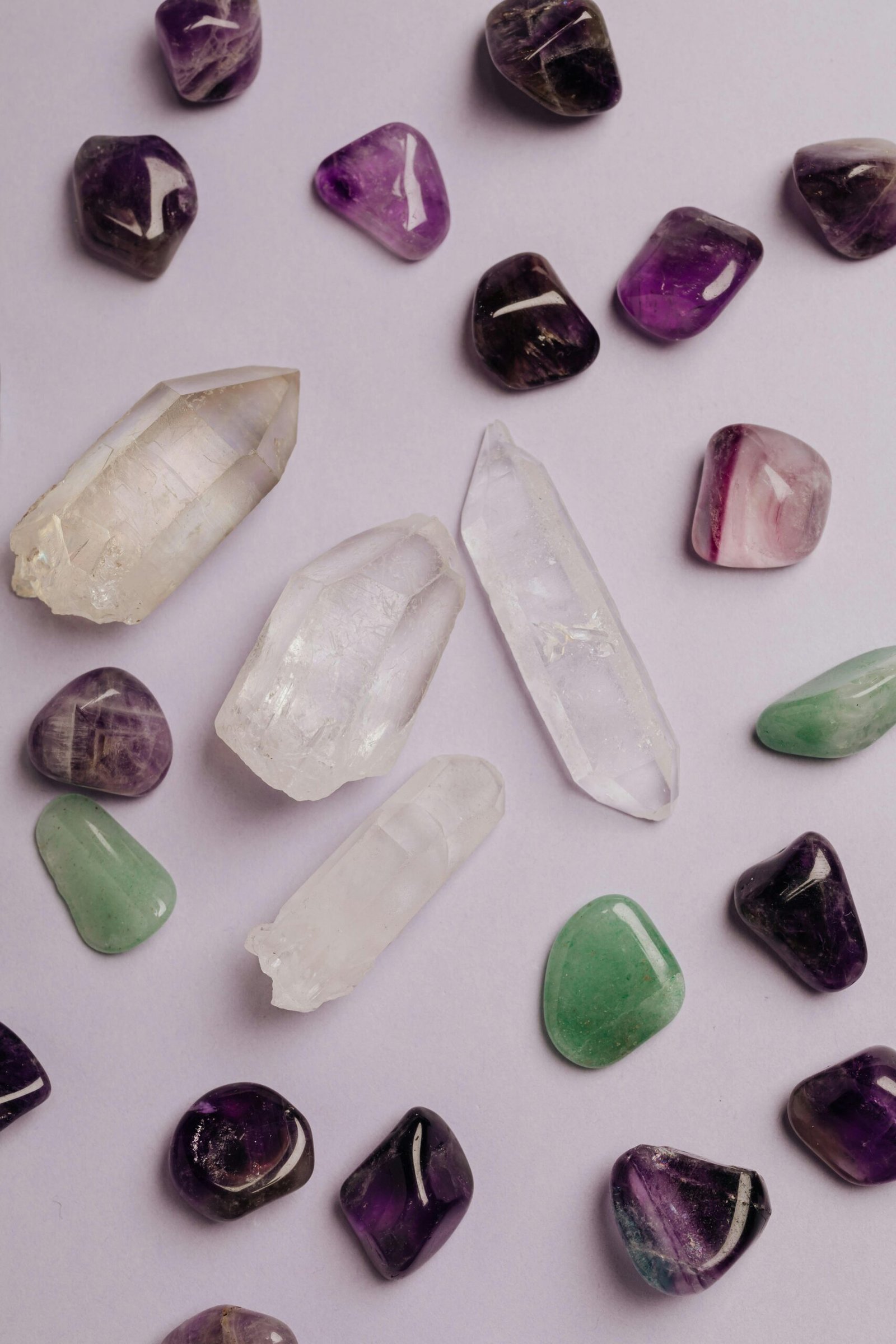
Upload 1–3 photos of any crystal or mineral specimen. Our AI analyses colour, crystal structure, luster, and form to identify it in seconds — with confidence scoring and expert properties.
Upload photos of points, clusters, raw pieces, tumbled stones, or specimens on matrix — get an AI identification with habit, crystal system, and collector tips.
Drag & drop photos here
or click to browse
JPG, PNG, WEBP accepted
0 of 3 images added
⚙
Add details for better accuracy (optional)
0 / 200
Upload up to 3 angles for the most accurate result
Analysing your crystal…
🔮
Identification Confidence0%
⚠️
Low confidence — try uploading more angles or add details above.
📋 Description
🌋 Origin / formation
💎 Hardness (Mohs)
✨ Luster
🔮 Rarity
💰 Relative value
📍 Notable localities / regions
🎨 Typical colours
🔍 Key properties
🔮
Similar crystals
🔄 Alternative identifications
💡Collector tip
📷
Crystal identification has always required expert eyes — until now. Whether you’ve found a glittering specimen on a hiking trail, inherited a collection with missing labels, or simply want to know what that beautiful stone on your windowsill actually is, our AI crystal identifier gives you a professional-grade answer in seconds.
What You Get in Every Result
What Is Crystal Identification?
Crystal identification is the process of determining the exact mineral species of a crystalline specimen by analysing its physical and optical properties. Trained mineralogists and crystallographers use a systematic set of diagnostic tests — examining colour, luster, crystal form, cleavage, fracture, hardness, and streak — to arrive at a definitive identification.
Our AI crystal scanner replicates this same reasoning process. When you upload a photo, the model examines every visible diagnostic feature simultaneously: the specific shade and distribution of colour, the way light reflects off the surface (luster), the shape and habit of any visible crystal faces, the pattern of any fracture or cleavage planes, and the overall texture of the specimen. It then cross-references these observations against a comprehensive geological knowledge base to produce an identification with a confidence percentage.
The result isn’t just a name. You receive the full picture — scientific name, crystal system, Mohs hardness, typical formation environment, where in the world it’s commonly found, and whether your specimen might be valuable to collectors.
Why confidence scoring matters
Some crystals genuinely look similar to each other — rose quartz and pink calcite, for example, or amethyst and purple fluorite. Rather than guessing, our tool tells you exactly how certain the identification is and what the alternative possibilities are. A 91% confidence result is very different from a 58% result, and you deserve to know the difference.
How to Identify Crystals by Photo
Photo-based crystal identification is genuinely accurate for the vast majority of specimens people find or collect — provided the photos give the AI enough visual information to work with. Here’s exactly how to photograph your crystal for the best result:
01.
Use natural daylight
Natural light reveals the true colour and luster of a crystal far better than artificial lighting. Avoid flash — it creates glare that obscures crystal structure and washes out colour. A north-facing window on an overcast day is ideal.
02.
Use a plain background
Place your crystal on a sheet of plain white or black paper. Busy backgrounds confuse the AI and reduce accuracy significantly. White works best for dark crystals; black is better for pale, transparent specimens like clear quartz.
03.
Upload three angles
A top view, a side profile, and a close-up of the crystal faces or termination gives the AI maximum visual data. Three images consistently improves accuracy by 20–30% compared to a single image alone.
04.
Add physical context (optional but powerful)
Where you found the crystal, whether it scratches glass, its approximate weight, and any observed fluorescence under UV light — each piece of information the AI receives eliminates competing possibilities and sharpens the result.
“A wet crystal shows its true colour more vividly than a dry one. If you’re photographing a river-tumbled stone, photographing it slightly damp will often reveal banding, inclusions, and colour saturation that dry photography misses entirely.”
Types of Crystals Our AI Identifies
Our crystal identification tool covers the full spectrum of minerals, gemstones, and crystalline specimens that collectors, rockhounds, and geology enthusiasts encounter. Here are the major categories:
Understanding which physical properties geologists and mineralogists use to identify crystals helps you provide better context to our AI — and makes you a more confident field identifier yourself. These are the seven most diagnostic properties:
Property
What It Tells Us
How to Observe
Crystal Form & Habit
The shape of the crystal tells you its internal atomic structure and mineral group. Hexagonal prisms = quartz family. Cubic crystals = halides or pyrite.
Visible in photos — look for geometric faces, edges, and overall shape
Colour & Colour Zoning
While colour alone is unreliable (the same mineral can occur in many colours), colour distribution patterns are distinctive. Zoning, banding, or colour gradients are highly diagnostic.
Use consistent lighting; compare to known specimens
Luster
How light interacts with the surface. Vitreous (glassy), metallic, adamantine (diamond-like), pearly, silky, resinous, or dull — each luster type narrows the possibilities dramatically.
Best visible in natural light; look for reflections and surface quality
Transparency
Whether light passes through the crystal (transparent), partially (translucent), or not at all (opaque). Combined with colour, this is highly diagnostic.
Hold up to light; photograph with backlight for translucent specimens
Cleavage & Fracture
How the crystal breaks. Perfect flat cleavage (mica, calcite) vs conchoidal fracture (obsidian, quartz) vs uneven fracture — each pattern reflects the internal crystal structure.
Visible on broken surfaces; flat reflective planes indicate cleavage
Mohs Hardness
The hardness test is one of the most reliable single tests. Does it scratch glass (hardness >5.5)? Is it scratched by a steel knife? Each answer eliminates dozens of minerals instantly.
Physical test; enter result in our optional context fields
UV Fluorescence
Under UV light, many minerals fluoresce distinctive colours. Calcite glows red, fluorite glows blue or green, scheelite glows bright white. This is one of the most definitive tests available.
Use a UV flashlight in a dark room; photograph and describe the colour
The Six Crystal Systems — A Visual Guide
Every crystal belongs to one of six crystal systems defined by its internal symmetry. Recognising which system your specimen belongs to is often the fastest route to a correct identification, because it immediately restricts the possibilities to a manageable subset of minerals.
Cubic (Isometric): Perfect cubes, octahedra, and dodecahedra. Examples: pyrite (perfect cubes), garnet (dodecahedra), fluorite (octahedra), halite (cubes). The most symmetrical system.
Hexagonal: Six-sided prisms with flat terminations. The quartz family lives here — amethyst, citrine, rose quartz, clear quartz. Also includes tourmaline, which shows distinctive striations along the prism length.
Tetragonal: Square-based prisms and pyramids. Zircon and apophyllite are the most recognisable examples — they look like elongated cubes.
Orthorhombic: Rectangular prisms with unequal axes. Topaz, barite, and olivine belong here. The prismatic cleavage of topaz is characteristic and diagnostic.
Monoclinic: Slanted prisms and tilted forms. Gypsum, selenite, azurite, and malachite are common examples. Selenite’s perfect cleavage producing thin flexible sheets is diagnostic of this system.
Triclinic: The lowest symmetry — irregular, tabular forms with no right angles. Labradorite, amazonite, and turquoise belong here. The adularescence (internal glow) of labradorite makes it visually unmistakable.
Photography Tips for Accurate Crystal Identification
The quality of your photos is the single most important factor in identification accuracy. These four tips make a measurable difference:
Natural light, no flash
Overcast daylight is the gold standard. Flash creates harsh glare that removes the subtle surface details the AI uses for identification.
Plain background
White paper for dark specimens, black velvet for pale or transparent ones. The contrast makes edges, faces, and cleavage planes clearly visible.
Close-up of crystal faces
The geometry of crystal faces and terminations is the most diagnostic visual information available. A macro close-up is worth more than three general shots.
Try a wet photo
A slightly damp surface dramatically enhances colour saturation and banding visibility. Especially useful for agate, jasper, and banded minerals.
Common Crystal Identification Mistakes to Avoid
Even experienced collectors make these errors. Being aware of them helps you get a better result from our tool and improves your own identification skills.
Relying on colour alone
Colour is the least reliable identification property. Fluorite occurs in every colour of the rainbow. Quartz occurs in purple (amethyst), pink (rose quartz), yellow (citrine), brown (smoky quartz), and clear. Always look at crystal form and luster alongside colour.
Confusing luster types
The difference between vitreous (glassy), resinous, and pearly luster is significant but subtle. The key question is: does the surface look like polished glass, like amber/resin, or like the inside of a shell? Each answer points to a different mineral group.
Assuming a purple crystal is always amethyst
Purple fluorite is extremely common and frequently misidentified as amethyst. The two minerals have completely different crystal systems — amethyst forms hexagonal prisms; fluorite forms cubes and octahedra. They also feel very different in weight (fluorite is noticeably denser).
Ignoring the matrix
The rock that a crystal grew in tells you as much as the crystal itself. Crystals growing on a granite matrix live in a completely different geological context than crystals growing on limestone. Always photograph the matrix when it’s present.
Photographing dirty specimens
Surface dirt, oxidation, and mineral coatings obscure the diagnostic properties the AI uses. A gentle rinse with clean water before photographing significantly improves accuracy.
Frequently Asked Questions
How accurate is AI crystal identification from a photo?
For common crystals — quartz varieties, feldspars, calcite, fluorite, and most gemstones — our AI achieves 88–95% accuracy when provided with good quality photos. Accuracy drops to 70–85% for rarer specimens or mineralogically complex stones. The confidence percentage displayed with every result tells you exactly how certain the identification is. Adding physical context (location found, hardness test result) consistently improves accuracy by 10–15%.
Can you identify crystals that have been tumbled or polished?
Yes, our tool works with tumbled stones, polished cabochons, cut gemstones, and raw natural specimens. However, raw natural crystals with visible crystal faces are generally the easiest to identify because the crystal geometry is preserved. Polished or tumbled stones hide the crystal form, meaning the AI relies more heavily on colour, luster, and any visible internal features. For polished stones, uploading multiple angles and providing hardness data significantly improves accuracy.
What is the difference between a crystal and a mineral?
All crystals are minerals, but not all minerals show obvious crystal form. A mineral is defined by its specific chemical composition and internal crystal structure. A crystal is a solid where atoms are arranged in a highly ordered repeating three-dimensional pattern — creating characteristic geometric external shapes. When mineralogists say “crystal,” they typically mean a specimen that shows well-developed external crystal faces reflecting that internal ordering. Massive minerals (without visible crystal faces) are still minerals but are often not called crystals colloquially.
Is the crystal identifier really free to use?
Yes. CrystalScanner’s crystal identifier is completely free with no sign-up, no subscription, and no hidden costs. You can upload photos and receive full identification results at no charge. The result includes the mineral name, scientific name, crystal system, Mohs hardness, luster type, rarity, collector value, common locations, similar minerals to check, and a practical collection tip — all free.
What should I do if the AI says it can’t identify my crystal?
If the confidence is below 55%, our tool will suggest specific improvements — better lighting, a different angle, or additional context. Try retaking the photo under natural daylight with the crystal on a plain background, and add the optional physical details like where you found it and whether it scratches glass. If the tool still can’t identify it with confidence, the result will show the most likely candidates and what additional tests (such as streak test, acid test, or UV fluorescence) would definitively confirm the identification.
Can I identify crystals that glow under UV light?
Yes. UV fluorescence is one of the most diagnostic properties for certain minerals. If your crystal glows under UV light, mention the colour of fluorescence in the “additional notes” field when submitting your identification. Fluorite typically glows blue or green, calcite glows red or orange, scheelite glows bright white, and willemite glows vivid green. This information allows the AI to significantly narrow its candidates.
Still have a question?
A slightly longer description goes here, providing a bit more detail