🌙 AI-Powered Moonstone Identification

Moonstone Identifier —
Real Moonstone or Look-Alike?

Upload a photo of your moonstone — loose, set in jewellery, or rough — and our AI identifies the moonstone variety, assesses adularescence quality, distinguishes genuine moonstone from opalite glass and labradorite, and gives you a complete expert profile in seconds. Free, no sign-up required.

Free · No sign-up Adularescence assessment Opalite glass detection All moonstone varieties Rainbow vs blue sheen

What You Get in Every Result

  • Moonstone verdict — Natural / Simulant (Opalite/Glass)
  • Confidence percentage with full visual reasoning
  • Moonstone variety — Adularia, Peristerite, Rainbow, Cat’s Eye, Star
  • Adularescence quality — strength, colour, and centring
  • Body colour and transparency description
  • Geographic origin indicators — Sri Lanka, India, Myanmar, Madagascar
  • Look-alike identification — opalite, labradorite, opal, selenite
  • Collector value and rarity indication
  • Care instructions and cutting quality assessment
agate identifier

Moonstone Identifier

Identify moonstone (feldspar) vs common look-alikes such as opalite glass, labradorite, chalcedony, and quartz

Drag & drop photos here

or click to browse

JPG, PNG, WEBP accepted

0 of 3 images added

Add details for better accuracy (optional)

Upload up to 3 angles for the most accurate result

Identification Confidence 0%

Low confidence — try uploading more angles or add details above.

Description

Origin / formation

Is Moonstone

Feldspar hint

Adularescence

Sheen behavior

Body color

Treatment / fake

Probable origin

Hardness (Mohs)

Luster

Rarity

Relative value

Notable localities / regions

Typical colours

Key properties

    Similar gemstones

    Alternative identifications

    Authentication Tip

    Note: Moonstone confirmation and feldspar variety checks often require gem testing (RI/SG) and magnification. Photo ID is a starting point, not an appraisal.

    Collector tip

    What Is Moonstone — and What Causes the Glow?

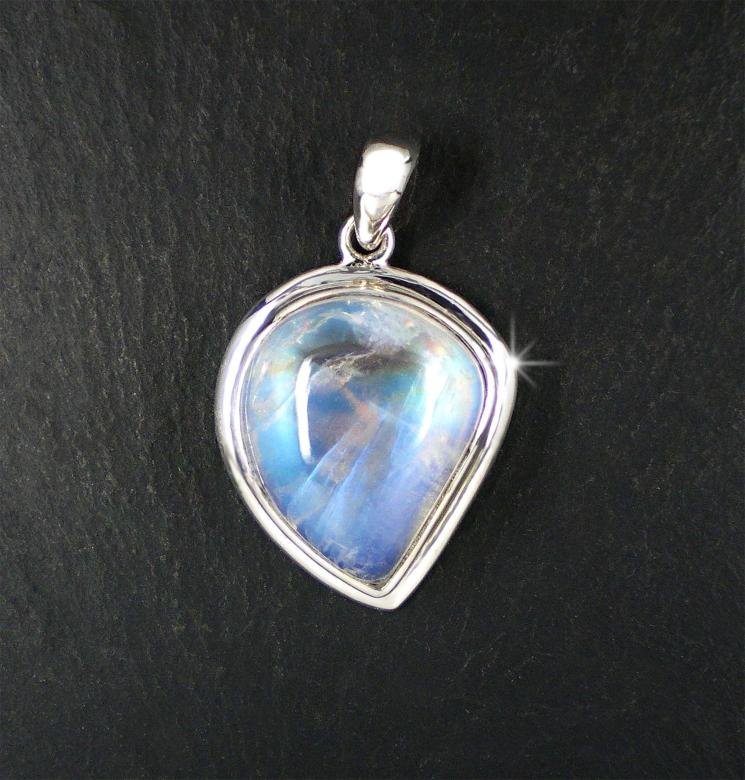
    Moonstone is a variety of feldspar — specifically, it belongs to the orthoclase or oligoclase feldspar group — and its most captivating property is adularescence: a soft, billowing, floating glow of blue, white, or rainbow light that appears to move beneath the surface as the stone is tilted. This optical effect is unique to moonstone among common gemstones and is what makes it instantly recognisable to anyone who has seen a fine specimen.

    Adularescence is caused by the internal microstructure of the stone. Moonstone consists of alternating thin layers of two different feldspar minerals — orthoclase and albite — that grew together during formation. When light enters the stone, it scatters between these layers and produces the characteristic rolling, diffuse glow. The thinner and more regular the layers, the stronger and bluer the adularescence. Thicker, less regular layers produce white or no adularescence.

    The name moonstone comes from its resemblance to the light of the moon — a comparison noted independently by cultures across the world for thousands of years. In Hindu tradition, it is a sacred stone formed from solidified moonbeams. In Roman mythology it was said to be formed from the rays of Diana. In the Art Nouveau movement, it became the gem of choice for Lalique, Fabergé, and the great European jewellers of the era.

    Adularescence vs other optical phenomena — what makes moonstone unique

    Adularescence is specifically the diffuse, billowing glow produced by light scattering between internal feldspar layers. It is not the same as labradorescence (the metallic colour flash in labradorite), play-of-colour (the spectral display in opal), or iridescence (surface interference in pearls). Moonstone’s glow appears to come from within and below the surface — not from the surface itself — which is what creates the impression of depth and movement that no other optical phenomenon in gemology replicates. This internal quality is the primary indicator of genuine moonstone vs opalite glass, which shows only surface-level shine.

    The Feldspar Family — Where Moonstone Belongs

    Moonstone is one of several gem varieties within the feldspar mineral group — the most abundant mineral group on Earth, making up over half of the planet’s crust. Several feldspars produce optical effects that make them gem-quality materials:

    Moonstone
    Orthoclase / Oligoclase
    Adularescence — the soft, rolling blue or rainbow glow caused by light scattering between orthoclase and albite layers. The defining feldspar gem. Mohs 6–6.5. Classic sources: Sri Lanka, Myanmar, India, Madagascar.
    Labradorite
    Labradorite feldspar
    Labradorescence — a metallic, iridescent colour flash in blue, green, gold, orange, or red across the surface. More vivid and metallic than moonstone’s glow. Spectrolite from Finland shows all colours simultaneously. Mohs 6–6.5.
    Sunstone
    Oligoclase / Labradorite
    Aventurescence — a glittering, metallic shimmer caused by oriented copper or hematite platelets. Oregon Sunstone is a benchmark gem with vivid colour and strong aventurescence. Mohs 6–6.5.
    Amazonite
    Microcline feldspar
    Opaque to translucent blue-green to green colour from lead and water impurities. No optical phenomenon — colour alone is the gem property. Mohs 6–6.5. Sometimes confused with turquoise.
    Orthoclase
    Orthoclase feldspar
    Transparent yellow to golden-yellow feldspar from Madagascar — faceted as a collector gem. No adularescence. Often confused with yellow topaz or golden beryl. Mohs 6–6.5.
    Andesine
    Plagioclase feldspar
    Red to orange-red or green feldspar from the Democratic Republic of Congo and Tibet. Market controversy over treatment status — some material is diffusion-treated to produce colour. Mohs 6–6.5.

    Moonstone Varieties — Blue, Rainbow, Cat’s Eye, and More

    Not all moonstones are the same. The quality, colour, and character of adularescence varies enormously depending on the feldspar composition, the thickness and regularity of the internal layers, and the geographic source. Our AI identifies all major moonstone varieties.

    Blue Moonstone
    Sri Lanka (primary)
    The classic, most prized moonstone — a transparent to semi-transparent colourless body with a vivid, floating blue adularescence that moves across the stone as it tilts. The blue sheen is caused by very thin, regular alternating feldspar layers that scatter short-wavelength (blue) light preferentially. Sri Lanka produces the finest blue moonstones, particularly from Meetiyagoda. The transparency of the body combined with a strong, centred blue glow commands the highest prices.
    Most Valuable — fine quality commands significant premiums
    Rainbow Moonstone
    India, Madagascar
    Despite the name, rainbow moonstone is technically labradorite — not orthoclase moonstone — and shows a multicoloured flash rather than the blue adularescence of true moonstone. The rainbow effect includes blues, greens, yellows, and sometimes reds across a translucent white to colourless body. Widely sold as moonstone and accepted in the trade under this name. Rainbow moonstones from India often show black tourmaline inclusions.
    Good Value — widely available; technically labradorite
    White / Milky Moonstone
    India (Rajasthan)
    Semi-opaque to translucent white body with white adularescence — the most commonly available and affordable moonstone variety. The opacity comes from thicker, less regular feldspar layers that scatter light more diffusely. Widely used in beads, carvings, and commercial jewellery. The white glow is attractive but less dramatic than blue adularescence. India is the dominant source of commercial white moonstone.
    Affordable — widely available; strong visual appeal
    Peach / Orange Moonstone
    India, Tanzania
    Warm peach to orange-brown body colour with white or pale adularescence. The colour comes from iron impurities in the feldspar structure. Less common than white moonstone; the warm body colour against the floating glow creates a distinctive visual quality appreciated by designers. Tanzania produces some peach moonstone with particularly warm colour. A popular choice for bohemian and artisan jewellery.
    Moderate — appealing colour; affordable price range
    Cat’s Eye Moonstone
    Sri Lanka, India
    Moonstone displaying chatoyancy — a single band of light that moves across the surface under a single light source, resembling a cat’s eye. Caused by parallel needle-like inclusions or tube-like cavities oriented in one direction, in addition to the adularescence layers. Always cut as a cabochon to display the eye. Cat’s eye moonstone with strong, well-centred eye and good adularescence is a prized collector variety.
    Collector Value — good eyes with adularescence are rare
    Star Moonstone
    Sri Lanka
    Extremely rare — moonstone displaying a four or six-rayed star (asterism) caused by two or three sets of oriented inclusions intersecting. Must be cut as a cabochon. A genuine star moonstone — showing both adularescence and a well-defined star simultaneously — is among the rarest feldspar gem phenomena. Sri Lanka is the only significant source. Very few collectors encounter genuine star moonstone in their lifetimes.
    Exceptionally Rare — commands significant collector premiums

    Adularescence Quality — The Most Important Moonstone Value Factor

    The quality of adularescence is the single dominant factor in moonstone valuation — more important than size, clarity, or even body colour. Our AI assesses adularescence from your photograph across three quality indicators: strength, colour, and centring.

    Strong / Vivid
    Adularescence immediately visible and bright. Glow appears to float freely within the stone. Moves clearly with minimal tilt. Centred on the dome of the cabochon. Commands maximum premiums.
    Moderate
    Adularescence visible with some effort. Glow present but may be patchy or off-centre. Requires specific lighting angle to display well. Standard commercial quality.
    Weak / Absent
    Little to no adularescence visible. Stone may show attractive body colour or translucency but lacks the optical phenomenon that defines moonstone quality. Low collector value.

    The Three Adularescence Quality Factors

    • Strength. How vivid and bright the glow appears — from a faint shimmer to a vivid rolling cloud of light that dominates the stone’s appearance. Strength is determined by the regularity and thinness of the alternating feldspar layers.
    • Colour. Blue adularescence is the most prized — it indicates the thinnest, most perfectly alternating layers (around 50–100 nanometres thick) that scatter blue light preferentially. White adularescence from thicker layers (200+ nanometres) is attractive but less valuable. Rainbow adularescence showing multiple spectral colours is most striking but technically indicates labradorite rather than orthoclase moonstone.
    • Centring. The adularescence should ideally sit centred on the top of the cabochon dome, rolling symmetrically as the stone tilts. Off-centre glow — where the brightspot appears toward one edge — indicates less ideal cutting. A well-cut moonstone cabochon is oriented to centre the adularescence perfectly.

    “The finest Sri Lankan blue moonstone — transparent body, vivid centred blue adularescence that moves with the stone like light under water — is one of the few gemstones that genuinely changes appearance with every slight movement. No photograph fully captures it. The effect must be seen in person, which is why experienced buyers always examine moonstone under moving light before purchasing.”

    How to photograph moonstone for AI identification

    Moonstone is one of the more challenging gems to photograph for identification because adularescence is a dynamic phenomenon that shifts with viewing angle. For best AI results: photograph under a single directional light source (a phone torch works well), tilt the stone slightly until the adularescence is clearly visible, and shoot from directly above. Take multiple photos at different tilt angles and upload the one where the glow is most visible. Include a side view if possible — this helps our AI assess body transparency and cabochon dome height, both of which affect adularescence quality assessment.

    Moonstone Origins — Where the Best Moonstones Come From

    Geographic origin has a significant but not absolute impact on moonstone quality. Sri Lanka remains the benchmark source for finest quality blue moonstones, but important material comes from several other countries, each with characteristic differences in colour, clarity, and adularescence quality.

    Origin Typical Variety Key Character Market Status
    Sri Lanka Blue moonstone, Cat’s eye, Star Transparent bodies with floating blue adularescence — the world benchmark. Meetiyagoda district is the classic locality. Also produces cat’s eye and rare star moonstone Top Tier — finest quality
    Myanmar (Burma) Blue moonstone, colourless Some of the most transparent moonstones with excellent blue adularescence — rivals Sri Lanka. Limited production. Collector quality material. Top Tier — collector quality
    India (Rajasthan) White, peach, rainbow, cat’s eye Dominant source of commercial white and rainbow moonstone. Also produces peach and cat’s eye. Less transparent than Sri Lanka but wide range of body colours Commercial — most widely available
    Madagascar Rainbow moonstone, blue, peach Important source of rainbow moonstone (labradorite) and some blue moonstone. Variable quality — excellent material mixed with heavily included commercial grade Good Value — variable quality
    Tanzania Peach, orange, brown moonstone Warm-coloured moonstones with orange and peach body colours. Some cat’s eye material. Increasingly collected for warm palette jewellery design. Moderate — warm colours prized
    USA (Virginia, North Carolina) White to milky moonstone Historic American localities — Amelia Court House in Virginia. Modest production. Primarily of collector and mineralogical interest rather than gem trade significance. Collector — limited production

    Moonstone Look-Alikes — The Most Common Confusions

    Moonstone — particularly in its less expensive white variety — is one of the most widely substituted gemstones in the market. The combination of its visual appeal and relatively modest price makes substitution economically rational for dishonest sellers. These are the most important look-alikes to know:

    Opalite (Opalite Glass)
    Glass simulant — most common fraud
    The most widely sold moonstone simulant — a man-made opalescent glass that shows a blue or milky sheen superficially resembling adularescence. Opalite is extremely common in online and tourist markets, often sold simply as “moonstone.” Key distinctions: opalite’s glow is a surface reflection rather than an internal billowing cloud; it feels noticeably lighter than genuine moonstone (glass is less dense); it is perfectly smooth with no internal features under magnification; it shows no internal structure or cleavage planes. Opalite is not a mineral at all — it is manufactured glass.
    Tell: Glow on surface not internal; much lighter weight; perfectly uniform; no cleavage planes
    Labradorite
    Genuine feldspar
    Rainbow moonstone is technically labradorite — a plagioclase feldspar — and the two minerals are genuinely related and similar. True labradorite shows labradorescence: a metallic, more vivid colour flash across the surface rather than the soft internal billowing of true moonstone adularescence. Labradorite also has a darker, more grey body than most moonstones. The distinction matters commercially because true blue adularescent moonstone (orthoclase) commands higher prices than labradorite of similar appearance.
    Tell: Metallic surface flash vs internal glow; darker grey body tone; different cleavage angles
    White Opal
    Genuine gemstone
    Pale common opal without play-of-colour can superficially resemble white moonstone. Key differences: opal is amorphous (non-crystalline) and shows a waxy luster without feldspar’s characteristic vitreous quality; opal lacks cleavage; opal is softer (Mohs 5.5–6.5 vs 6–6.5); true adularescence — the rolling internal glow — is absent in opal. Ethiopian opal becomes transparent when wet (hydrophane) — this does not happen with moonstone.
    Tell: Waxy vs vitreous luster; no true adularescence; softer; no cleavage; hydrophane test
    Selenite / Satin Spar
    Genuine mineral
    Fibrous satin spar gypsum shows a chatoyant silky sheen that beginners sometimes confuse with moonstone’s adularescence. Critical differences: selenite is dramatically softer (Mohs 2 — scratched by a fingernail vs moonstone Mohs 6); it is much lighter; its sheen comes from fibrous structure, not feldspar layer scattering; it has perfect cleavage in three directions producing flat surfaces. Satin spar is sometimes used in beads alongside moonstone.
    Tell: Scratched easily by fingernail; much lighter; fibrous texture; very different mineral feel
    Milky Quartz
    Genuine mineral
    Translucent white quartz is sometimes sold as moonstone in tourist markets. It is harder (Mohs 7), slightly denser, and shows no true adularescence — it has a milky, uniform whiteness rather than the rolling floating glow of moonstone. Under a loupe, quartz may show characteristic liquid and two-phase inclusions. The absence of any internal moving glow is the key distinguishing property.
    Tell: No adularescence whatsoever; harder (scratches feldspar); uniform milkiness not rolling glow
    Chalcedony / Blue Chalcedony
    Genuine mineral
    Pale blue to blue-grey chalcedony can occasionally be confused with blue moonstone by inexperienced buyers. Chalcedony shows no adularescence at all — it has a uniform translucent blue-grey colour with a waxy luster from its microcrystalline quartz structure. Mohs 7 — harder than moonstone. The complete absence of any internal rolling glow immediately distinguishes it from even mediocre moonstone.
    Tell: No adularescence; waxy not vitreous; harder; uniform colour without any rolling effect

    The opalite epidemic in online marketplaces

    Opalite glass is sold as moonstone on a massive scale across online marketplaces, particularly in bead and crystal healing markets. It is manufactured inexpensively and can closely resemble white moonstone in photographs — which is why photo-based identification is especially important for this gem. The key tests that photographs can reveal: genuine moonstone shows internal adularescence that appears to float below the surface; opalite shows a surface reflection only. Genuine moonstone also shows two distinct cleavage directions visible under magnification — opalite shows none. If a price seems very low for “moonstone,” it is almost certainly opalite.

    Moonstone Care — Protecting a Relatively Soft Gem

    Moonstone requires more thoughtful care than harder gemstones due to its moderate hardness and tendency to cleave. With appropriate handling, it is a beautiful and durable jewellery stone — but specific precautions prevent the most common causes of damage.

    💪
    Hardness and Cleavage
    Moonstone is Mohs 6–6.5 — softer than quartz, meaning ordinary dust (which contains quartz particles) can scratch the surface over time. Feldspar also has two directions of perfect cleavage — a sharp knock in the wrong direction can cleave the stone. Rings expose moonstones to regular impact; pendants and earrings are significantly safer settings for everyday wear.
    Avoid rings for daily wear; bezel settings protect better than claws
    🧹
    Cleaning
    Clean with a soft damp cloth or a very soft brush with mild soap and lukewarm water. Rinse thoroughly and pat dry. Never use ultrasonic cleaners — vibration stresses the internal feldspar layers that create adularescence and can cause internal fracturing. Steam cleaning is also unsafe — thermal shock can damage the internal structure.
    Soft cloth · Mild soap · Lukewarm water only
    📦
    Storage
    Store separately from harder stones — quartz, topaz, sapphire, diamond — which will scratch moonstone on contact. A soft pouch or individually lined compartment is ideal. Avoid storing in direct sunlight for extended periods. Moonstone does not require humidity like opal, but very dry conditions should be avoided if the stone shows any pre-existing surface fractures.
    Soft pouch · Away from harder stones · No direct sunlight storage
    ⚗️
    Chemicals
    Avoid prolonged contact with household chemicals, bleach, and harsh cleaning agents. These can etch the feldspar surface and permanently dull the adularescence. Perfume, hairspray, and cosmetics should be applied before putting moonstone jewellery on. Remove moonstone rings before cleaning, gardening, or doing dishes.
    No bleach · No harsh chemicals · Jewellery on last, off first

    Frequently Asked Questions

    What causes the glow inside moonstone?
    The glow is called adularescence and is caused by the internal structure of the stone. Moonstone is composed of alternating microscopic layers of two different feldspar minerals — orthoclase and albite — stacked like an incredibly thin sandwich. When light enters the stone, it scatters between these layers. If the layers are thin enough (around 50–100 nanometres), they scatter blue light most effectively, producing the characteristic floating blue glow. Thicker layers scatter all wavelengths and produce white adularescence. The phenomenon is entirely natural and cannot be replicated precisely by glass — which is why it is the primary test for genuine moonstone.
    Is rainbow moonstone real moonstone?
    Rainbow moonstone is technically labradorite — a plagioclase feldspar — rather than orthoclase moonstone. The two minerals are related (both are feldspars) but mineralogically distinct. Rainbow moonstone shows labradorescence — a metallic, vivid colour flash across the surface — rather than the soft internal billowing of true moonstone adularescence. The trade name “rainbow moonstone” is widely accepted and the material is genuinely attractive, but collectors and serious buyers should understand that it is labradorite sold under a commercial moonstone name. True orthoclase blue moonstone from Sri Lanka is a different mineral and commands higher prices.
    How do I tell real moonstone from opalite glass?
    The most reliable tests: firstly, the nature of the glow — genuine moonstone shows adularescence that appears to float within and below the stone’s surface, moving as a billowing cloud; opalite shows a surface reflection only, like a sheen on the glass rather than light from within. Secondly, weight — opalite glass is noticeably lighter than moonstone of equivalent size. Thirdly, temperature — genuine moonstone stays cooler for longer against the skin than glass. Fourthly, under magnification, genuine moonstone shows internal cleavage planes and natural inclusions; opalite is perfectly uniform with no internal structure. Our AI analyses the character of the visible glow — its depth, movement quality, and distribution — as the primary indicator.
    Why is Sri Lankan moonstone so special?
    Sri Lanka — particularly the Meetiyagoda district — produces moonstones with a unique combination of properties rare in any other source: high transparency in the body combined with vivid, strongly centred blue adularescence. The transparency allows the blue glow to appear three-dimensional and floating rather than just a surface sheen. The blue is caused by unusually thin and regular alternating feldspar layers. Most Indian commercial moonstone has a more translucent or milky body that displays white rather than blue adularescence. The combination of transparency and blue glow is what makes fine Sri Lankan moonstone so captivating and valuable.
    Does moonstone need to be cut as a cabochon?
    Yes — moonstone must always be cut as a cabochon to display adularescence. The phenomenon requires a curved, domed surface to concentrate and display the scattered light as a centred glow. Faceting a moonstone scatters the adularescence into multiple small reflections rather than one coherent glow and effectively destroys the optical effect. The cabochon dome height matters too — a too-flat or too-high dome positions the adularescence poorly. A skilled cutter orients the stone so the feldspar layers run parallel to the base of the cabochon, then adjusts the dome height to centre the glow perfectly on top.
    Is moonstone safe for everyday jewellery?
    Moonstone is best suited to occasional wear rather than everyday use, particularly in rings. Its Mohs 6–6.5 hardness means ordinary dust and contact with harder surfaces can scratch the surface over time. Its two cleavage directions make it vulnerable to chipping or cleaving from knocks. For everyday wear, a protective bezel setting and awareness of activities that expose the stone to impact is advisable. Pendants and earrings are safer for daily use than rings. With appropriate care and a protective setting, moonstone can be enjoyed regularly — but it benefits from more thoughtful handling than sapphire, diamond, or topaz.

    Have a Moonstone to Identify?

    Upload your photo above for an instant AI assessment — or explore our full range of identifier tools below.

    Identify My Moonstone ↑