
Citrine Identifier —
Natural, Heated Amethyst, or Simulant?
Upload a photo of your citrine — loose, set in jewellery, or rough — and our AI identifies whether it is natural citrine, heated amethyst sold as citrine, or a simulant such as yellow glass or synthetic material. Get colour grade, origin indicators, and treatment notes in seconds. Free, no sign-up required.
What You Get in Every Result
- Citrine verdict — Natural / Heated Amethyst / Simulant
- Confidence percentage with full visual reasoning
- Colour grade — Lemon, Golden, Madeira, Palmeira, Bahia
- Heat treatment indicators — reddish tips, artificial colour zoning
- Ametrine detection — natural purple-yellow bicolour quartz
- Simulant identification — yellow topaz, yellow glass, synthetic
- Geographic origin indicators — Brazil, Bolivia, Madagascar, USA
- Collector value and care advice
Citrine Identifier
Identify citrine (yellow quartz) vs heated amethyst, lemon quartz, glass, and other yellow gems
Drag & drop photos here
or click to browse
JPG, PNG, WEBP accepted
0 of 3 images added
Add details for better accuracy (optional)
Upload up to 3 angles for the most accurate result
Description
Origin / formation
Is Citrine (yellow quartz)
Natural vs heated
Colour
Quartz habit / form
Inclusions / zoning
vs look-alikes
Synthetic / glass
Probable origin
Hardness (Mohs)
Luster
Rarity
Relative value
Notable localities / regions
Typical colours
Key properties
Similar gemstones
Alternative identifications
Note: Natural citrine vs heated amethyst usually requires lab testing (trace elements, IR) or documented provenance. Photo ID is a starting point, not an appraisal.
What Is Citrine — and Why Is Most of It Heated Amethyst?
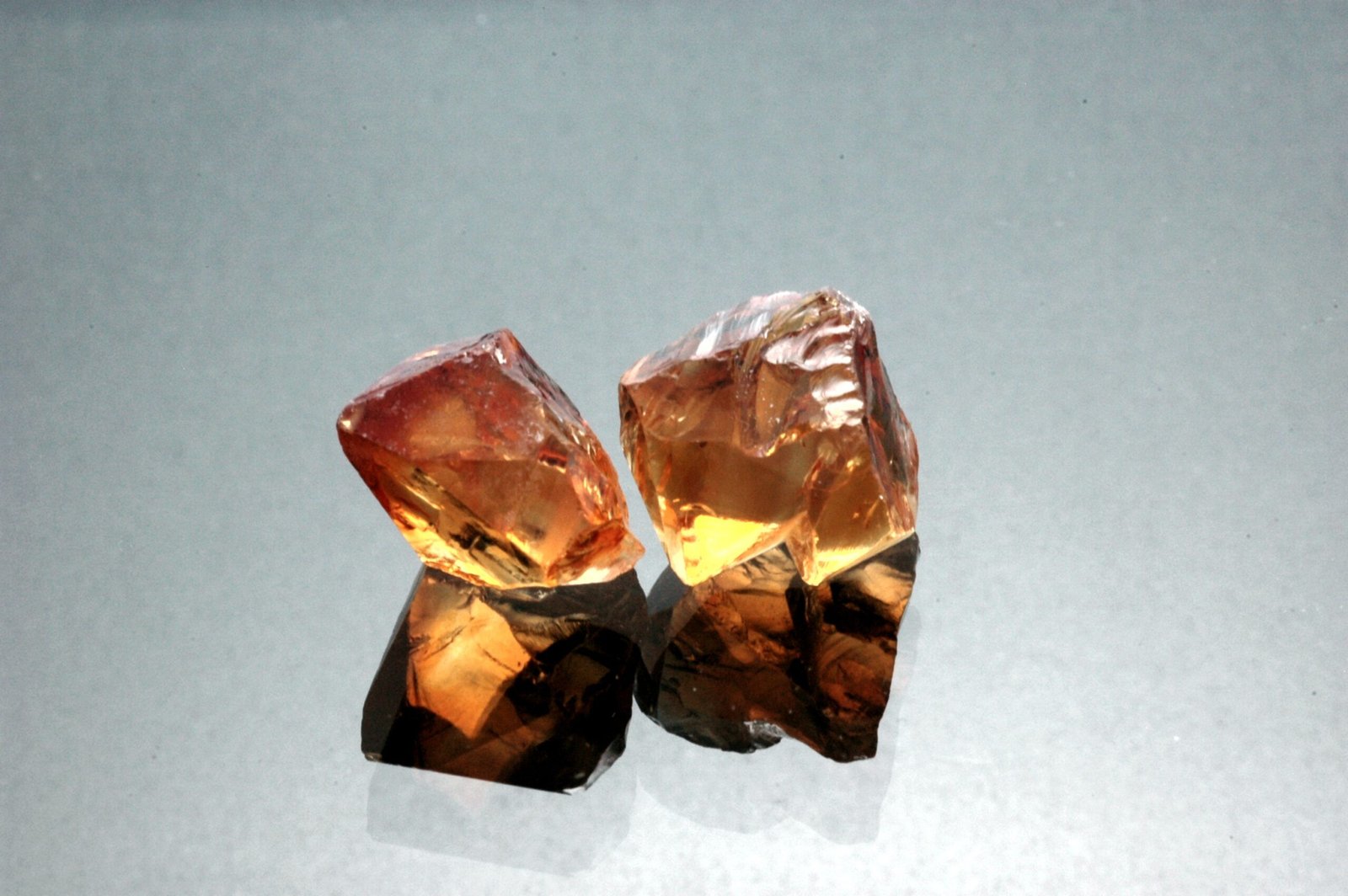
Citrine is the yellow to orange-brown variety of quartz (SiO₂) — the same mineral species as amethyst, smoky quartz, rose quartz, and rock crystal. Its colour ranges from the palest lemon yellow to deep, rich amber orange-brown. Natural citrine is coloured by trace amounts of iron in the quartz structure — specifically Fe³⁺ (ferric iron) ions that absorb blue light and transmit yellow.
Here is the critical market truth: naturally occurring citrine is genuinely rare. The vast majority of commercial citrine — probably 95% or more — is amethyst or smoky quartz that has been heat-treated to convert its colour to yellow or orange. When amethyst is heated to approximately 470–560°C, the purple colour centres (also caused by iron, but Fe⁴⁺) are transformed to yellow-orange Fe³⁺ centres. The transformation is permanent and the resulting colour is commercially sold as citrine. This treatment is so universal and so accepted that it is rarely disclosed at point of sale — but it matters for collectors who seek genuinely natural material.
The “topaz” naming confusion — antique jewellery pitfall
Throughout the 18th, 19th, and early 20th centuries, yellow quartz (citrine) was routinely called “topaz” in the jewellery trade — specifically “Madeira topaz,” “Palmeira topaz,” “Bahia topaz,” “Brazilian topaz,” and “Spanish topaz.” None of these are mineral topaz. If you have inherited jewellery described as “topaz” that appears yellowish-brown or golden, it is almost certainly citrine quartz rather than the harder, denser silicate mineral topaz. The names persist to this day and cause significant consumer confusion. Our AI distinguishes citrine from genuine topaz.
Citrine Colour Grades — From Lemon to Deep Madeira
Citrine’s colour is the primary value driver, and the market uses both descriptive grade names and origin-based trade names to classify the spectrum from pale yellow to rich amber-brown. The deeper, more saturated colours — particularly Madeira — command the highest premiums.
“True Madeira citrine — the colour of aged Madeira wine, with its deep amber and reddish-brown flashes in a large faceted stone — is one of the most underrated colour gemstones in the market. It shows exceptional fire in strong light and an extraordinary warmth that no photograph fully captures. Despite being almost universally heat-treated amethyst, it is genuinely beautiful at prices far below equivalent ruby or imperial topaz.”
Natural Citrine vs Heated Amethyst vs Simulants
Understanding the three categories helps you interpret your AI result and make informed purchasing decisions. The value difference between natural citrine and heated amethyst is modest — but the difference between either and a glass simulant is significant.
The reddish tip indicator — fastest visual sign of heated amethyst
The most reliable visual indicator that citrine is heat-treated amethyst is the presence of reddish-orange “fire tips” at the termination points of crystal facets — particularly visible at the culet (bottom point) and the corners of the crown. When amethyst is heated, the colour transformation is not perfectly uniform: the crystal tips, which have slightly different crystallography, often develop more intense reddish-orange than the body of the stone. This reddish-at-the-tips appearance is characteristic of heated material and rarely seen in natural citrine, which shows more diffuse, gradual colour zoning.
Ametrine — The Natural Purple-and-Yellow Bicolour Quartz
Ametrine is one of the most extraordinary natural gemstone phenomena — a quartz crystal that is simultaneously amethyst and citrine, showing distinct purple and yellow zones in the same stone. The colour boundary is sharp, not gradual, and the two zones maintain their distinct identities through the crystal.
True ametrine comes almost exclusively from a single source: the Anahi Mine in the Santa Cruz department of Bolivia. The mine’s unique geological conditions produce quartz crystals where different growth sectors have different iron oxidation states — Fe⁴⁺ (purple amethyst) in some sectors and Fe³⁺ (yellow citrine) in others — creating the bicolour effect entirely naturally. A small amount of ametrine is produced in India but Bolivian material dominates the market.
The ideal faceted ametrine shows an approximately 50/50 colour split between vivid purple and vivid yellow-orange — each zone as saturated as possible. The stone is typically cut with the colour boundary running diagonally or across the centre to display both colours equally. Synthetic ametrine is also produced — our AI flags indicators of synthetic vs natural origin.
Distinguishing natural ametrine from heat-treated partial amethyst
Some sellers create a bicolour effect by partially heating an amethyst crystal — heating one end while protecting the other — to produce a purple-yellow piece resembling ametrine. The distinction: natural ametrine shows a sharp, planar colour boundary that follows the crystal’s growth zones; partially heated material shows a more diffuse, irregular boundary that may not align with the crystal structure. Under magnification, natural ametrine shows the colour boundary intersecting growth features at specific angles consistent with the crystal’s internal structure.
Citrine Origins — Where Natural and Heated Material Comes From
| Origin | Typical Colour / Grade | Natural or Heated | Market Status |
|---|---|---|---|
| Brazil (Rio Grande do Sul) | Madeira, Palmeira, Bahia — all deep grades | Primarily heated amethyst from the same region’s extensive amethyst deposits | Dominant source — all grades |
| Brazil (Minas Gerais) | Lemon to golden — lighter natural material | Some natural citrine produced alongside other quartz varieties | Natural material available |
| Bolivia (Anahi Mine) | Ametrine — bicolour purple and yellow | Entirely natural bicolour — the world’s primary ametrine source | Unique — only ametrine source |
| Madagascar | Light yellow to golden — variable | Mix of natural and heated; some fine natural pale citrine produced | Commercial — variable quality |
| USA (Colorado, North Carolina) | Light yellow — typically pale and natural | Natural citrine from pegmatites; small quantities but genuine natural origin | Collector — natural origin |
| Spain (La Rioja) | Golden to deep golden | Historical source — “Spanish topaz” was Spanish citrine. Some natural material still produced | Historical — limited production |
Citrine Look-Alikes — Yellow and Orange Stone Confusions
The weight test for citrine — the universal yellow stone field test
Citrine’s specific gravity of 2.65 is at the lighter end for gemstones — it is a light stone. Yellow topaz (SG 3.53) feels about 33% heavier than an equivalent citrine. Yellow sapphire (SG 4.0) feels approximately 50% heavier. This difference is immediately perceptible when holding same-sized stones — no equipment required. If a yellow stone feels unexpectedly heavy for its size, it is almost certainly not citrine. This simple test eliminates the most commercially significant confusions (topaz and sapphire) in seconds.
Citrine in History — From Ancient Talismans to Art Deco Glamour
- Ancient use. Citrine has been used as a gemstone for at least 6,000 years. Ancient Greeks carved it into intaglio gems; Romans used it in signet rings and cameos. It was worn as a talisman against snake venom and evil thoughts. The name comes from the Old French citrin — lemon — referring to its colour.
- The Scottish tradition. Scottish kilt pins and Celtic jewellery have incorporated citrine for centuries — it was an important stone in Highland culture and continues to appear in traditional Scottish silver jewellery. The smoky yellow-brown material from Scottish rivers was prized under the name “Cairngorm” — after the mountains where it was found.
- Victorian jewellery. Large faceted citrines were fashionable in Victorian jewellery — particularly the deep Madeira and Palmeira grades. The warm amber colour suited the elaborate gold settings of the period. Much antique Victorian “topaz” jewellery is actually citrine.
- Art Deco (1920s–30s). Citrine had its greatest commercial moment in the Art Deco era — large faceted Madeira citrine was used alongside rock crystal and smoky quartz in the bold geometric designs of the period. Hollywood stars wore enormous citrine rings and brooches, making the stone fashionable across America and Europe. This created the modern commercial importance of heat-treated citrine in its deeper grades.
- November birthstone. Citrine is the modern birthstone for November — a designation that significantly drives demand and makes it one of the most widely purchased gemstones globally.
Frequently Asked Questions
Have a Citrine to Identify?
Upload your photo above for an instant AI assessment — or explore our full range of identifier tools below.
Identify My Citrine ↑