
Lapis Lazuli Identifier —
Natural, Dyed, or Simulant?
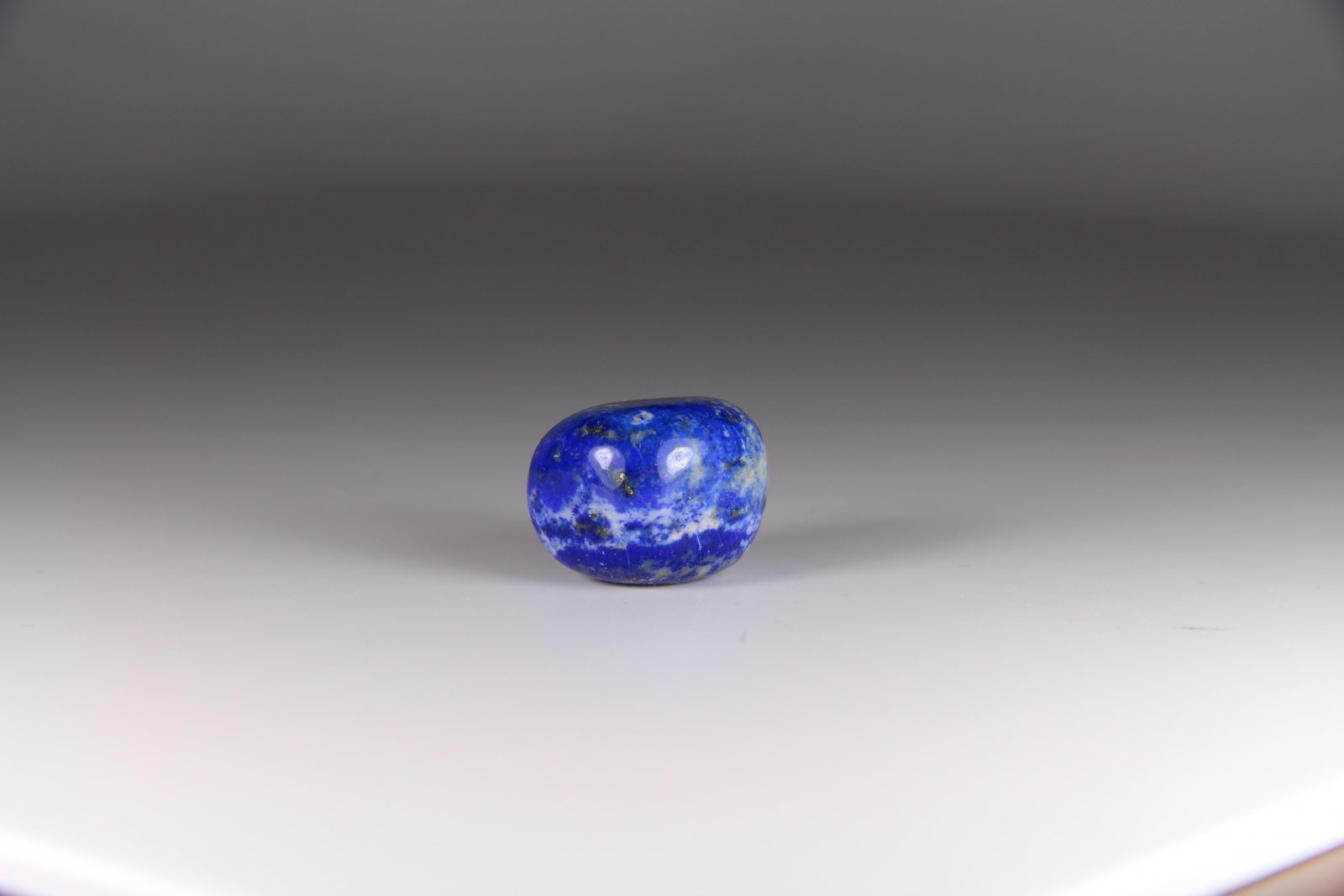
Upload a photo of your lapis lazuli — jewellery, carving, bead, or rough — and our AI identifies whether it is natural lapis, dyed material, or one of the many simulants. Our tool assesses quality grade, pyrite and calcite content, Afghan vs Chilean origin, and flags the most common lapis substitutes sold in the market. Free, no sign-up required.
What You Get in Every Result
- Lapis verdict — Natural / Dyed / Simulant
- Confidence percentage with full visual reasoning
- Quality grade — Persian/AAA, Afghan Commercial, Chilean, Utility
- Pyrite content — golden fleck assessment
- Calcite content — white vein and patch assessment
- Geographic origin indicators — Afghanistan, Chile, Russia, USA
- Simulant identification — sodalite, dyed howlite, dyed jasper, glass
- Ultramarine pigment context and historical significance
- Collector value and care advice
Lapis Lazuli Identifier
Identify lapis lazuli (lazurite rock) vs sodalite, dyed howlite/jasper, and blue glass
Drag & drop photos here
or click to browse
JPG, PNG, WEBP accepted
0 of 3 images added
Add details for better accuracy (optional)
Upload up to 3 angles for the most accurate result
Description
Origin / formation
Is Lapis Lazuli
Composition hint
Matrix & pyrite
Colour & texture
vs look-alikes
Dye / treatment
Synthetic / glass
Probable origin
Hardness (Mohs)
Luster
Rarity
Relative value
Notable localities / regions
Typical colours
Key properties
Similar materials
Alternative identifications
Note: Dyed howlite and jasper can mimic lapis; sodalite can look similar without pyrite. Magnification (dye in cracks), SG, or lab testing may be needed. Photo ID is a starting point, not an appraisal.
What Is Lapis Lazuli — The Stone of Heaven
Lapis lazuli is not a single mineral — it is a rock, a geological aggregate of several minerals dominated by lazurite, a blue feldspathoid mineral that gives lapis its characteristic deep blue colour. The other minerals present — pyrite, calcite, sodalite, and others — are visible as golden flecks, white veins, and colour modifiers that together create the unique visual character of each lapis specimen. No two pieces of lapis are identical.
Lapis has been prized for over 6,000 years — longer than almost any other gemstone material. The mines of Badakhshan in northeastern Afghanistan have been continuously worked since at least 4000 BCE, supplying lapis to the ancient Egyptians, Mesopotamians, Greeks, Romans, and the great civilisations of the Indus Valley. Lapis was crushed to produce ultramarine — the most precious and stable blue pigment in the pre-modern world, used by Michelangelo, Raphael, Vermeer, and virtually every major European painter until a synthetic substitute was developed in 1826.
Lapis lazuli is a rock — not a mineral
Unlike most gemstones (which are single minerals), lapis lazuli is a metamorphic rock composed of multiple minerals. This distinction matters for identification: lapis should always show some heterogeneity — variation in colour, golden pyrite flecks, occasional white calcite veins — because it is an aggregate material. A uniformly perfect, completely unblemished “lapis” with absolutely no variation in colour or texture is likely dyed material, sodalite, or glass rather than genuine lapis lazuli.
The Minerals Inside Lapis Lazuli — What Creates Its Look
The quality and character of lapis lazuli is determined by the proportions and distribution of its constituent minerals. Understanding what each mineral contributes helps interpret the AI’s quality assessment.
Lapis Lazuli Quality Grades — From Persian to Utility
The lapis lazuli market uses a quality grading system based primarily on colour depth, calcite content, and pyrite distribution. Understanding these grades is essential for assessing value — price differences between grades can be enormous for equivalent weights.
“The finest Afghan lapis — a deep, even ultramarine blue with a scatter of golden pyrite stars and no visible calcite — is one of the most visually arresting of all gemstone materials. It does not sparkle or refract light dramatically. Its appeal is direct and commanding: pure, saturated colour, ancient, and unmistakable.”
The pyrite question — are golden flecks always good?
Pyrite is generally considered a desirable feature of lapis lazuli, but the amount matters. Fine scattered golden flecks evenly distributed across a deep blue surface — like gold dust on an ultramarine sky — are highly prized. Dense, clustered pyrite that creates a brownish or yellowish cast to the overall colour reduces visual quality. Very large pyrite masses similarly reduce value. No pyrite at all is also considered a slight deficit in most markets — pure lazurite-dominant material without any golden flecks can appear flat. The ideal is a moderate, evenly distributed scatter of fine pyrite points across uniform deep blue.
Lapis Origins — Afghanistan and the World’s Other Sources
Afghanistan has been the world’s dominant lapis source for at least 6,000 years and remains so today. The Sar-e-Sang mines in Badakhshan province are the benchmark for all lapis quality worldwide. Understanding how origin affects quality is essential for interpreting value.
| Origin | Typical Colour | Key Character | Market Status |
|---|---|---|---|
| Afghanistan (Sar-e-Sang, Badakhshan) | Deep, even royal blue to ultramarine — the world colour benchmark | Highest lazurite content, deepest colour, finest pyrite distribution, lowest calcite. Mined continuously for 6,000+ years. All quality grades from AAA to commercial produced here | Premier — world benchmark |
| Chile (Coquimbo region) | Medium blue — often with visible white calcite veins and patches | Second largest commercial source globally. Lower lazurite content, higher calcite than Afghan material. More affordable — widely used in jewellery and decorative objects at accessible prices | Commercial — affordable quality |
| Russia (Lake Baikal, Siberia) | Slightly greenish or violet-tinged blue — distinctive hue different from Afghan | Produces fine quality material with characteristic hue different from Afghan — sometimes preferred for its purple undertone. Limited production. Historically important in Russian decorative arts | Good Quality — distinctive colour character |
| USA (Colorado, California) | Variable — often lighter blue with significant calcite | Minor production from several localities. Generally commercial or collector grade. California material is primarily of mineralogical interest. Colorado has produced some gem-quality material | Minor — collector interest |
| Myanmar (Mogok) | Variable blue — some fine material | Limited production from the same Mogok region famous for rubies and sapphires. Interesting geological association. Modest commercial importance | Limited — collector only |
Natural, Dyed, and Simulant Lapis — The Identification Challenge
Lapis lazuli is one of the most widely faked and treated gemstones in the market. Its deep blue colour is achievable with several dye processes, and numerous minerals and synthetic materials can imitate its appearance convincingly in photographs. Here are the most important alternatives:
The acetone test — fastest field test for dyed lapis simulants
Dyed howlite, dyed jasper, and dyed calcite all release blue dye when a cotton bud or cotton wool lightly dampened with acetone (nail polish remover) is rubbed gently on the surface in an inconspicuous area. Genuine lapis lazuli releases no dye — its blue colour is caused by the mineral lazurite’s sulphur radical, not an applied dye. This test takes seconds and definitively separates natural lapis from the most common dyed simulants. Always perform on a hidden area as the dye removal from a simulant may damage the piece.
Lapis in History — The Blue That Coloured Western Art
No gemstone material has had a more profound impact on art history than lapis lazuli. Its primary historical role was not as a gemstone but as the source of ultramarine — a pigment of such beauty, stability, and expense that it defined the colour blue in European painting for six centuries.
- Ancient Egypt. Lapis was imported from Afghanistan and used for jewellery, inlay, and cosmetics for over 4,000 years. The death mask of Tutankhamun features extensive lapis inlay. Lapis was associated with the night sky, the gods, and the afterlife — it was more precious than gold in many contexts. Ground lapis was used as blue eye shadow and body paint in ceremonial contexts.
- Ultramarine pigment. Crushed and purified lapis produces ultramarine — the most brilliant, stable, and expensive blue pigment of the pre-modern world. A gram of genuine ultramarine cost more than gold. Medieval and Renaissance artists reserved it exclusively for the most important elements of their paintings: the Virgin Mary’s robe, the sky in paradise, divine figures. Michelangelo’s unfinished paintings show grey skies — he could not afford the ultramarine to complete them.
- Vermeer’s secret. Johannes Vermeer used ultramarine with extraordinary lavishness — more than any contemporary Dutch painter — which partly explains both the luminous blues of his paintings and the significant debts he left at his death. The cost of ultramarine was a major factor in the finances of Renaissance and Baroque painters.
- Synthetic ultramarine, 1826. When French chemist Jean-Baptiste Guimet synthesised ultramarine from cheap industrial materials in 1826, the 6,000-year monopoly of the Afghan mines on the world’s blue pigment ended overnight. Genuine lapis ultramarine was abandoned by painters within a decade. The development of synthetic ultramarine — essentially the same molecule as lazurite — freed painting from its dependence on a single Afghan mountain range.
- Mesopotamia and the Indus Valley. The oldest known lapis mines at Sar-e-Sang supplied the civilisations of Mesopotamia, the Indus Valley, and Egypt simultaneously from at least 4000 BCE. Lapis beads found in ancient Sumerian sites were traded across thousands of miles — making the Afghan mines one of the longest-running trading relationships in human history.
Lapis Lazuli Care — Protecting a Relatively Soft Stone
Lapis is moderately soft (Mohs 5–6) and porous, which makes it more vulnerable to damage than harder gemstones. Appropriate care preserves both its colour and its polish.
- Hardness. At Mohs 5–6, lapis is softer than quartz, topaz, and most common minerals in dust and grit. Daily wear will accumulate scratches on exposed surfaces over time. Protective settings — bezels or closed backs — reduce surface contact. Rings expose lapis to more abrasion than pendants or earrings.
- Porosity and acids. Lapis is porous and sensitive to acids — including perfume, hairspray, and household cleaners. Acidic substances attack the calcite component and can bleach or alter the colour. Put lapis jewellery on last and take it off first. Avoid wearing during cleaning, cooking with acidic foods, or swimming in chlorinated pools.
- Cleaning. Clean with a damp soft cloth only. Avoid soap — it can penetrate the pores and be difficult to remove. Never soak lapis in water or immerse it for cleaning. Ultrasonic and steam cleaning are both unsafe — they can cause colour changes and structural damage to the porous material.
- Wax and impregnation. Some lapis is stabilised with wax or resin to fill surface pores and improve colour uniformity. This is considered acceptable when disclosed. Avoid exposing wax-stabilised lapis to heat — candle heat, direct sunlight, and high temperatures melt the wax and alter the surface appearance.
- Storage. Store lapis separately from harder gemstones. A soft cloth pouch or individually lined compartment prevents scratching from contact with other jewellery. Keep away from prolonged direct sunlight — extended UV exposure can affect the colour of some specimens.
Lapis waxing — the standard surface treatment
Most commercial lapis lazuli has been lightly waxed or oiled to fill surface pores and enhance the depth and uniformity of the blue colour. This is an ancient, widely accepted practice — the equivalent of oiling emerald in the lapis market. It is rarely disclosed at point of sale because it is considered so routine. The wax is not permanent and can be removed by heat or solvents, after which re-waxing is straightforward. This treatment does not significantly affect value in the way that polymer impregnation of B-grade jade does.
Frequently Asked Questions
Have Lapis to Identify?
Upload your photo above for an instant AI assessment — or explore our full range of identifier tools below.
Identify My Lapis ↑