๐ŸŸก AI-Powered Gold Identification

Gold Identifier โ€”
Is This Real Gold?

Upload a photo of your gold specimen, nugget, jewellery, or ore. Our AI screens for pyrite (fool’s gold), chalcopyrite, mica, and other common look-alikes โ€” giving you a gold likelihood verdict with confidence scoring in seconds.

Free ยท No sign-up Checks pyrite, chalcopyrite & mica Nuggets, flakes & jewellery Hallmark guidance included Results in seconds

What You Get in Every Result

  • Gold likelihood verdict โ€” Definite / Very Likely / Possible / Unlikely / Definitely Not
  • Confidence percentage with full visual reasoning
  • Look-alike identification โ€” pyrite, chalcopyrite, mica, brass
  • Purity estimate from hallmarks if visible
  • Key physical properties โ€” colour tone, luster, specific gravity context
  • Common global locations for native gold deposits
  • Practical next steps โ€” streak test, acid test, assay office advice
  • Alternative identifications with individual confidence scores
mineral identification example

Gold Identifier

Upload sharp photos with scale โ€” colour, crystal shape, streak, and heft help separate native gold from pyrite, chalcopyrite, and mica. AI screening only; not a lab assay.

Drag & drop photos here

or click to browse

JPG, PNG, WEBP accepted

0 of 3 images added

Add details for better accuracy (optional)
0 / 200

Upload up to 3 angles for the most accurate result

Identification Confidence 0%

Low confidence โ€” try uploading more angles or add details above.

Description

Origin / formation

Hardness (Mohs)

Luster

Rarity

Relative value

Notable localities / regions

Typical colours

Key properties

    Similar look-alikes

    Alternative identifications

    Collector tip

    What Our Gold Identifier Analyses

    Native gold has a unique combination of colour, weight, malleability, and form that distinguishes it from even the most convincing look-alikes. When you upload a photo, the AI examines the specific visual properties that separate genuine gold from fool’s gold and other common imposters.

    Real Gold Shows
    โœ“Rich warm butter-yellow โ€” not brassy, not pale
    โœ“Irregular, organic shapes โ€” nuggets, flakes, wires, dendritic forms
    โœ“No geometric crystal faces โ€” gold never forms cubes or perfect polyhedra
    โœ“Bright metallic luster that does not tarnish or oxidise
    โœ“Malleable โ€” bends without breaking, edges smooth not sharp
    โœ“Yellow streak on unglazed ceramic tile (streak test)
    Fool’s Gold Shows
    โœ—Brassy or pale yellow โ€” not the rich warm tone of gold
    โœ—Perfect cubic or pyritohedral crystal faces โ€” geometric and angular
    โœ—Striated (grooved) crystal faces โ€” a hallmark of pyrite
    โœ—Brittle โ€” shatters rather than bends; sharp crystal edges
    โœ—Black or dark grey streak on ceramic tile
    โœ—Tarnishes to brown or iridescent purple (chalcopyrite)

    What photos cannot determine

    Specific gravity is the most reliable single test for gold โ€” gold’s extraordinary density (SG 19.3) means a gold nugget feels surprisingly heavy for its size. This cannot be assessed from a photograph. Similarly, the streak test and acid test require physical contact with the specimen. Our tool provides a strong visual screening โ€” for specimens of potential significant value, a professional assay is always the definitive answer.

    Gold Look-Alikes โ€” The Full Picture

    Gold has fooled prospectors, collectors, and buyers for centuries. Understanding exactly what each look-alike is and how it differs helps you interpret your result and know what follow-up tests to perform.

    Look-Alike Mineral / Material Colour Key Tell Streak Colour
    Pyrite (Fool’s Gold) Iron Sulfide (FeSโ‚‚) Brassy yellow Perfect cubic crystals; striated faces; brittle Black / dark grey
    Chalcopyrite Copper Iron Sulfide Brassy, iridescent Tarnishes to purple and blue; more iridescent than gold Greenish black
    Mica (Muscovite) Silicate mineral Pale gold, silver Thin flexible flakes; very lightweight; pearly luster White / colourless
    Pyrrhotite Iron Sulfide (FeS) Bronze-yellow Magnetic โ€” strongly attracted to a magnet Dark grey-black
    Brass / Gold-Plated Copper-zinc alloy Bright yellow Uniform, manufactured edges; may show wear exposing base metal N/A โ€” metal
    Yellow Tourmaline Borosilicate mineral Golden yellow Glassy luster; striated prismatic crystals; not metallic White

    “The single most reliable visual test for gold is crystal form โ€” or rather its absence. Gold never forms perfect geometric crystals. If your yellow specimen has sharp cubic faces, perfect angles, or geometric symmetry, it is almost certainly pyrite.”

    Forms of Gold Our AI Identifies

    Native gold and gold-bearing materials occur in several distinct forms in nature, each with different visual properties. Our AI identifies which form you are likely looking at alongside the gold likelihood assessment.

    ๐Ÿชจ Native Gold Nuggets
    Rounded, organic masses of near-pure gold. Found in alluvial (river) deposits. Surface often shows a hammered, irregular texture. The most recognisable form.
    โœจ Gold Flakes & Dust
    Thin flat particles found by panning river sediment. True gold flakes are heavy for their size and have a warm yellow colour. Mica flakes are common and easily confused.
    ๐ŸŒฟ Dendritic Gold
    Branching, tree-like formations of gold crystals grown in quartz veins. One of the most beautiful and collectable forms. The branching pattern is unmistakable.
    ๐Ÿ”— Wire Gold
    Thin wire-like threads of gold intergrown with quartz or other minerals. A premium collector’s form. The flexible, metallic wires are highly characteristic of native gold.
    โ›๏ธ Gold in Quartz
    Gold veins running through white quartz matrix. Often visible as bright yellow specks or threads in white rock. A common form from lode gold deposits.
    ๐Ÿ’ Gold Jewellery & Alloys
    Yellow gold, rose gold, and white gold jewellery. Purity indicated by hallmarks (9K, 14K, 18K, 24K, 375, 585, 750, 999). Our AI reads visible hallmarks and assesses colour tone.

    Gold Hallmarks โ€” Reading Purity Stamps

    If your gold specimen is jewellery, a coin, or a bar, it likely carries a hallmark stamp indicating purity. Our AI reads visible hallmarks from your photo and explains what they mean. Here is a quick reference to the most common systems:

    999
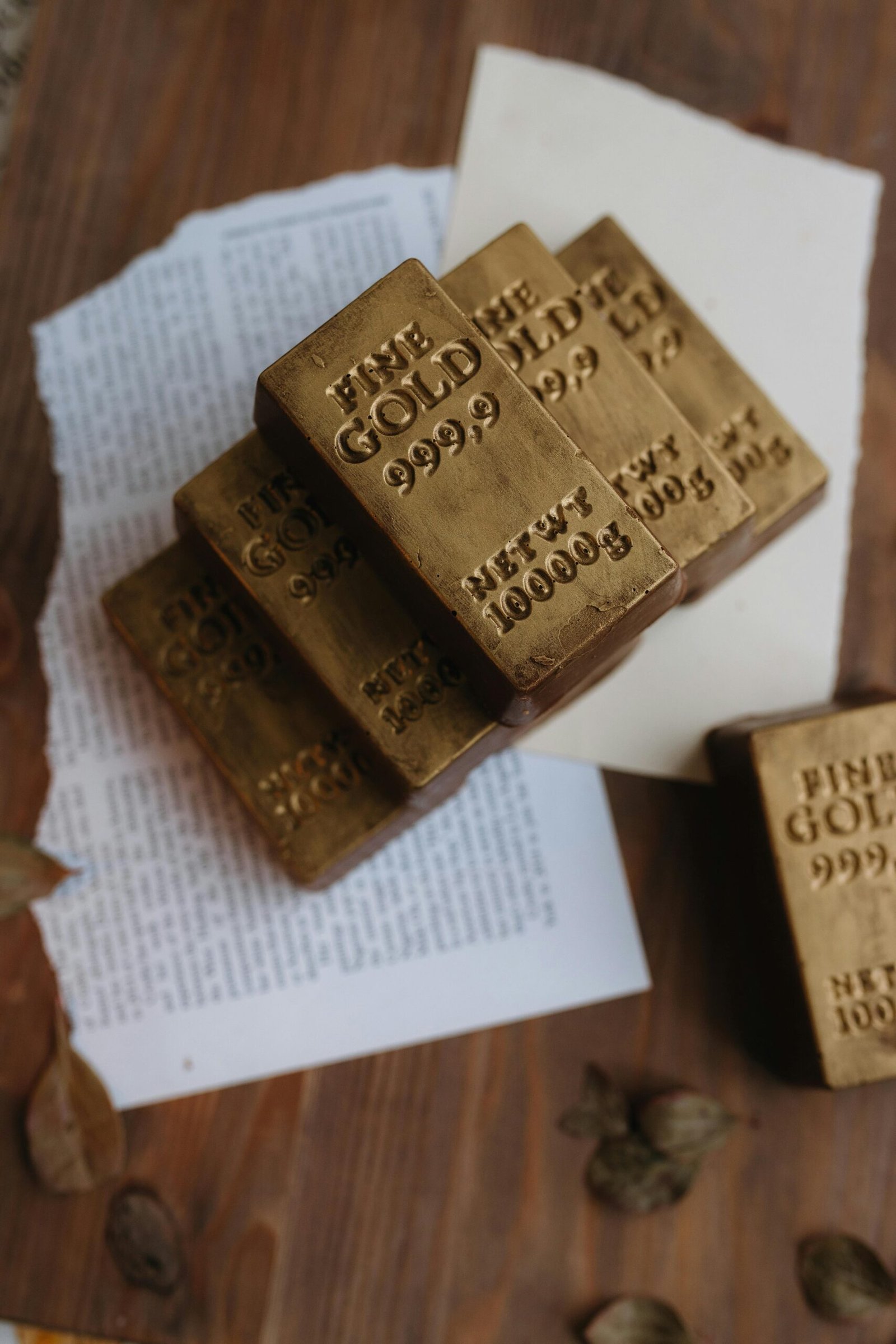
    Fine Gold
    99.9% pure. Used for investment bars and coins. Also marked as 24K or 24ct.
    750
    18 Karat
    75% gold. The most popular purity for fine jewellery worldwide. Deep yellow colour.
    585
    14 Karat
    58.5% gold. Standard in the USA. Slightly paler than 18K but more durable.
    375
    9 Karat
    37.5% gold. Common in the UK and Australia. Noticeably paler, more durable.
    417
    10 Karat
    41.7% gold. Legal minimum in the USA. The most durable common gold alloy.
    Au
    Chemical Symbol
    Aurum โ€” the Latin name for gold. Often appears alongside purity numbers on bars and certificates.

    Gold-filled and gold-plated โ€” not the same as solid gold

    Gold-filled (GF) and gold-plated (GP or GEP) items are base metals coated with a thin gold layer. Hallmarks like “1/20 14K GF” or “GP” indicate this. Our AI flags when a specimen’s surface appearance, wear patterns, or visible base metal are inconsistent with solid gold. For definitive purity testing, an XRF test at a jeweller or assay office is required.

    At-Home Gold Tests โ€” What Works and What Doesn’t

    Several methods are commonly suggested for testing gold at home. Here is an honest assessment of each โ€” which are reliable, which are partially useful, and which are myths:

    ๐Ÿบ
    The Streak Test
    Drag the specimen across unglazed ceramic tile (the back of a bathroom tile works). Gold leaves a golden-yellow streak. Pyrite leaves a black or dark grey streak. One of the most reliable simple tests.
    Excellent โ€” most reliable home test for gold vs pyrite
    ๐Ÿงฒ
    The Magnet Test
    Hold a strong magnet near the specimen. Pure gold is non-magnetic. If the specimen is attracted to the magnet, it is not gold. Note: pyrrhotite (magnetic pyrite) fails this test but most pyrite does not attract magnets either.
    Good โ€” rules out iron-bearing minerals if magnetic
    ๐Ÿ’ง
    The Weight Test
    Gold has an extremely high specific gravity (SG 19.3) โ€” it is nearly 4ร— denser than iron pyrite (SG 5.0). A genuine gold nugget feels surprisingly, almost shockingly heavy for its size. If it feels light, it is not gold.
    Very useful โ€” gold’s weight is its most distinctive property
    ๐Ÿ”จ
    The Malleability Test
    Gold is extremely malleable โ€” it bends without breaking. Tap a small flake with a pin or point. Gold deforms; pyrite and chalcopyrite shatter into powder. Only attempt this on a dispensable piece of the specimen.
    Reliable โ€” but damages the specimen
    โš—๏ธ
    The Acid Test
    Nitric acid dissolves base metals and most gold look-alikes but does not react with gold. Gold testing kits with acid solutions of different strengths test different karats. Available from jewellery suppliers. Handle with care.
    Definitive โ€” but requires acid test kit and care
    ๐Ÿ’…
    The Nail Polish Test
    Applying nail polish remover (acetone) to gold has no effect. On gold-plated or gold-filled items, the acetone may begin to dissolve the lacquer or reveal wear. Not reliable as a standalone test.
    Not reliable โ€” do not rely on this alone

    Where Native Gold Is Found

    Native gold occurs in two primary geological environments, each producing specimens with different visual characteristics. Knowing where your specimen came from is one of the most useful pieces of context you can provide to the AI.

    • Alluvial / Placer deposits. Gold eroded from primary rock and transported by water, concentrating in river gravels and sands. Produces rounded nuggets, flakes, and dust. Countries with major placer gold include Australia (Victoria, Western Australia), USA (California, Alaska), and Russia. Placer gold is typically very pure โ€” 85โ€“98% gold.
    • Lode / Hard rock deposits. Gold still in its original host rock, typically as veins in quartz or in association with sulfide minerals. Produces specimens with gold in quartz matrix, dendritic gold, and wire gold. Famous lode gold regions include the Witwatersrand (South Africa), Nevada (USA), and Ontario (Canada).
    • Epithermal deposits. Formed at shallow depths from hydrothermal fluids. Often associated with volcanic regions. Gold occurs as fine grains within altered rock rather than visible nuggets. Common in Papua New Guinea, the Philippines, and parts of South America.
    • Alluvial beach deposits. Black sand beaches in some regions contain gold-bearing heavy mineral sands. New Zealand’s West Coast and parts of Alaska are notable examples. Gold in these environments is very fine-grained.

    Providing location improves accuracy significantly

    When you enter where you found your specimen in the optional context field, the AI uses geological probability to refine its assessment. A yellow metallic specimen found in an Australian goldfield river gravel is statistically much more likely to be gold than an identical-looking specimen from a non-gold-bearing region. Location context is the single most powerful optional input you can provide.

    Frequently Asked Questions

    How do I tell gold from pyrite (fool’s gold)?
    The three most reliable visual tests are crystal form, colour, and the streak test. Pyrite forms perfect geometric crystals with flat, often striated faces โ€” gold never does. Pyrite has a brassy, pale yellow colour; gold is a richer, warmer butter-yellow. And on unglazed ceramic, pyrite leaves a black streak while gold leaves a yellow one. If your specimen has any geometric crystal faces, it is almost certainly pyrite.
    Can AI identify gold from a photograph?
    The AI analyses colour tone, surface texture, crystal form (or absence of it), luster, and shape to assess whether a specimen is consistent with native gold or more likely a look-alike. For common look-alikes like pyrite and mica, photo-based identification is reliable. For very fine gold in complex ore, or gold-plated objects, physical testing gives more certainty. Every result shows a confidence percentage so you know how to weight the assessment.
    What does it mean if my gold is magnetic?
    Pure gold is not magnetic. If your specimen is attracted to a strong magnet, it is not solid gold โ€” it is either a ferromagnetic mineral (iron pyrite varieties, magnetite, pyrrhotite), a gold-coloured iron alloy, or an iron-based object with a gold coating. A magnet test is one of the quickest and most decisive home tests available. Test with the strongest magnet you can find, as weak magnets can give false negatives.
    What is the difference between 9K, 14K, 18K, and 24K gold?
    Karat (K or ct) measures gold purity in 24 parts. 24K is pure gold (99.9%). 18K is 18 parts gold and 6 parts other metals (75% gold), the most popular for fine jewellery. 14K is 58.5% gold, standard in the USA. 9K is 37.5% gold, common in the UK. Lower karat gold is harder and more durable but less yellow. Higher karat gold is softer and more intensely yellow. Our AI assesses visible hallmarks and colour tone to estimate karat.
    Can the tool identify gold jewellery as well as raw specimens?
    Yes. The tool works with gold nuggets, flakes, ore specimens, jewellery, coins, bars, and gold-plated objects. For jewellery, uploading a close-up of any visible hallmarks alongside the overall piece gives the AI the most useful information. The AI reads hallmark numbers (375, 585, 750, 999) and explains what they indicate, alongside a visual assessment of colour tone and surface condition.
    I found something shiny in a river โ€” how do I know if it is gold?
    Upload a clear photo alongside context about where you found it. Alluvial gold is typically found as rounded flat flakes or nuggets โ€” never as angular geometric pieces. Check the weight: real gold feels very heavy for its size. Try the streak test on an unglazed ceramic tile. Check whether it bends (gold) or shatters (pyrite). Mica is the most common false alarm โ€” it is very lightweight and flexible in thin sheets, which gold is not.

    Found Something Yellow and Shiny?

    Upload your photo above for an instant AI assessment โ€” or explore our other identifier tools below.

    Identify My Gold โ†‘