๐Ÿ’  AI-Powered Diamond Screening

Diamond Identifier โ€”
Is Your Diamond Real?

Upload a photo of your diamond, ring, or loose stone. Our AI screens for moissanite, cubic zirconia, white sapphire and glass simulants โ€” giving you an honest assessment with confidence scoring in seconds.

Free ยท No sign-up Checks 5 simulants Natural vs lab-grown note Mounted & loose stones Results in seconds

What You Get in Every Result

  • Diamond likelihood verdict โ€” Definite / Very Likely / Possible / Unlikely
  • Confidence percentage with full reasoning
  • Simulant identification โ€” moissanite, CZ, white sapphire, glass
  • Preliminary 4Cs assessment from photo
  • Similar gemstones with how to differentiate
  • Recommended next steps and professional testing advice
  • Alternative identifications with individual confidence scores
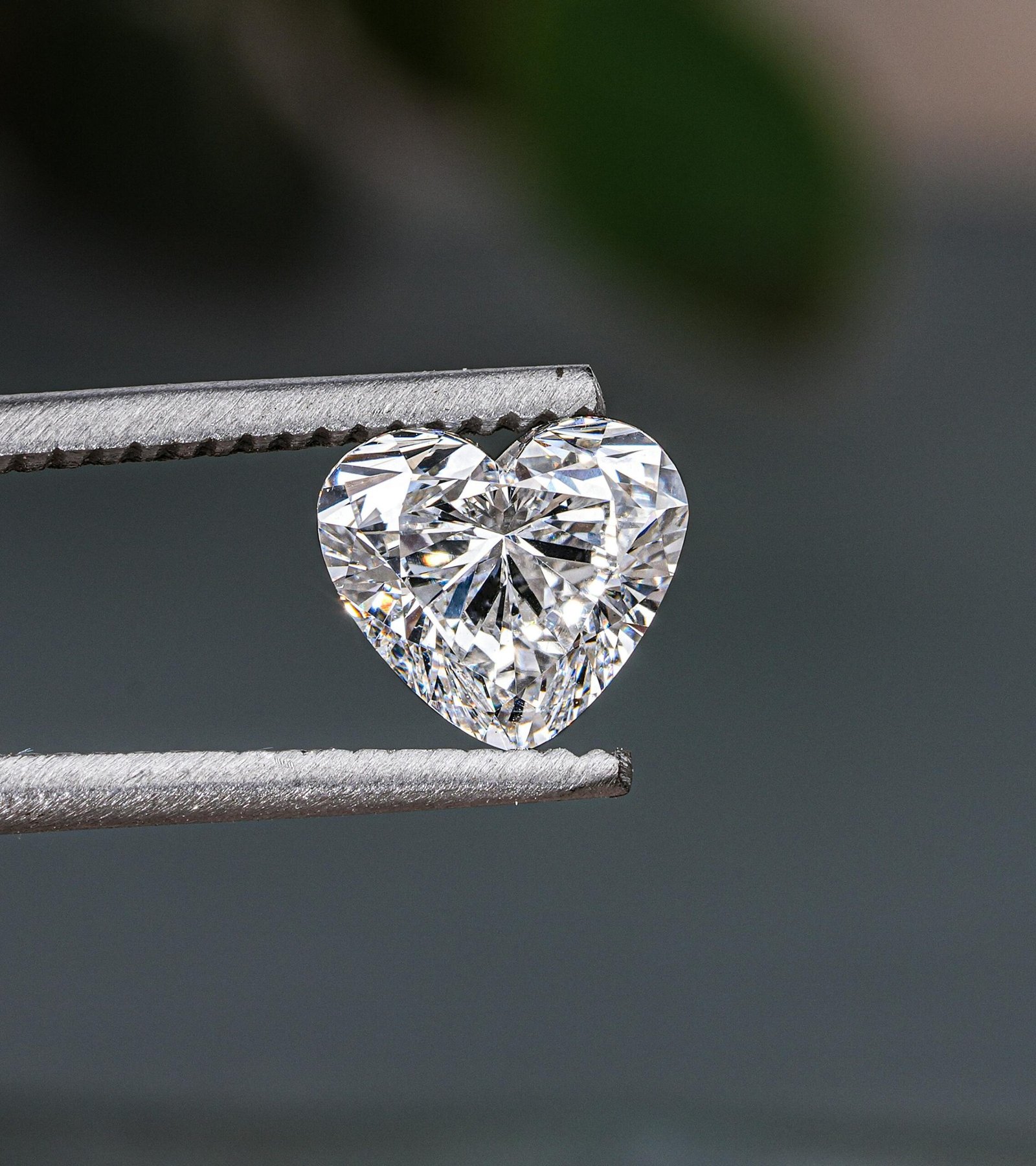
Diamond identification example

Diamond Identifier

Upload clear photos of a loose stone, ring, or rough โ€” table, side, and macro if possible. AI screens diamond vs common simulants (not a lab certificate).

Drag & drop photos here

or click to browse

JPG, PNG, WEBP accepted

0 of 3 images added

Add details for better accuracy (optional)
0 / 200

Upload up to 3 angles for the most accurate result

Identification Confidence 0%

Low confidence โ€” try uploading more angles or add details above.

Description

Origin / formation

Hardness (Mohs)

Luster

Rarity

Relative value

Notable localities / regions

Typical colours

Key properties

    Similar look-alikes

    Alternative identifications

    Collector tip

    What Our Diamond Identifier Analyses

    Diamond has a unique combination of optical and physical properties that no other mineral fully replicates. When you upload a photo, the AI examines four primary visual signatures that distinguish genuine diamond from its most common look-alikes.

    Real Diamond Shows
    โœ“Adamantine luster โ€” uniquely brilliant, hard to imitate
    โœ“Sharp, crisp facet edges that don’t show rounding
    โœ“No birefringence โ€” back facets appear single, not doubled
    โœ“Characteristic inclusions: clouds, feathers, pinpoints
    โœ“Fire (dispersion) that is subtle, not garish or rainbow-heavy
    โœ“Colour range from D (colourless) to Z (light yellow)
    Simulants Show
    โœ—Excessive rainbow fire โ€” moissanite’s most visible tell
    โœ—Rounded or abraded facet edges โ€” CZ and glass wear faster
    โœ—Doubled facet images visible through the table (moissanite)
    โœ—Too-perfect clarity โ€” CZ is almost always flawless
    โœ—Grey or yellowish tint in certain lighting (older CZ)
    โœ—Waxy or vitreous luster rather than true adamantine

    Important limitation โ€” what photos cannot show

    Thermal conductivity is the most reliable single test for diamonds โ€” diamond conducts heat faster than any other gem. This cannot be assessed from a photograph. For stones with significant value, laboratory testing always remains the definitive answer.

    Diamond Simulants โ€” What They Are and How They Differ

    A diamond simulant is any material that resembles diamond visually but has a different chemical composition and physical properties. Understanding each simulant helps you interpret your result and know what additional tests to request from a jeweller.

    Simulant Composition Hardness Key Visual Tell How Common
    Moissanite Silicon Carbide 9.25 Mohs Excessive fire; doubled back facets visible through stone Very Common
    Cubic Zirconia Zirconium Oxide 8.0โ€“8.5 Mohs Too-perfect clarity; facets round off with wear; warm tint Very Common
    White Sapphire Corundum (Alโ‚‚Oโ‚ƒ) 9.0 Mohs Milky, flat appearance; less brilliance than diamond Moderate
    Synthetic Spinel Magnesium Aluminate 8.0 Mohs Good brilliance but noticeably less fire Less Common
    Glass / Lead Crystal Silicon Dioxide + Lead 5.0โ€“6.0 Mohs Rounded edges; bubbles or swirls internally; low brilliance Rare in jewellery
    Lab-Grown Diamond Carbon โ€” identical to natural 10 Mohs (same) Visually identical to natural โ€” cannot be distinguished by eye Increasingly Common

    “Moissanite is the simulant most likely to fool buyers because its brilliance and hardness are genuinely close to diamond. The tell is its birefringence โ€” under magnification, you see double images of each back facet.”

    The 4Cs of Diamond Quality โ€” What Our AI Assesses

    The diamond industry grades every stone by four quality factors. Our AI provides a preliminary assessment of some of these from your photos โ€” though definitive grading always requires a gemologist’s physical inspection.

    C
    Cut
    The most important factor. Cut style โ€” brilliant, step-cut, or rose cut โ€” and visible proportions are assessed from your photo.
    C
    Colour
    Graded D (colourless) to Z (light yellow). Any visible tint in the photo is noted. Fancy coloured diamonds are flagged separately.
    C
    Clarity
    Inclusions visible in close-up photos are noted. Some inclusions actually help confirm natural origin.
    C
    Carat
    Cannot be measured from photos alone. Providing a ruler or coin alongside your photo allows a rough size estimate.

    Natural Diamond vs Lab-Grown โ€” Can the Tool Tell?

    No photo-based tool can reliably distinguish natural from lab-grown diamond. The two are chemically and physically identical โ€” both are pure carbon in the cubic crystal system, both score 10 on the Mohs scale, and both display identical optical properties. Advanced spectroscopic analysis at a certified gemological laboratory is the only reliable method.

    Valuation note

    Natural and lab-grown diamonds carry very different market values despite being physically identical. If you are buying, selling, insuring, or inheriting a diamond of significant value, always request a certificate from a recognised laboratory specifying natural vs laboratory-grown origin.

    At-Home Diamond Tests โ€” What Actually Works

    Several popular home tests for diamonds circulate online. Some are genuinely useful; others are myths that will mislead you. Here is an honest assessment of each:

    ๐ŸŒซ๏ธ
    The Fog Test
    Breathe on the stone. Diamond disperses heat so quickly it clears almost instantly. Glass and CZ stay fogged 2โ€“4 seconds longer.
    Useful โ€” but moissanite passes this too
    ๐Ÿ“ฐ
    The Newspaper Test
    Place the loose stone face-down on text. If you can read through it, it is not diamond. Diamond’s high refractive index completely distorts text.
    Useful for loose stones only
    ๐Ÿ”ฌ
    Facet Doubling
    Look through the table facet with a 10ร— loupe. If back facets appear doubled, it is moissanite. Diamond shows no doubling.
    Excellent โ€” definitively rules out moissanite
    ๐Ÿ’ง
    The Float Test
    Drop the stone in water. Real diamonds sink. The problem: most simulants also sink. This rules out some hollow glass but little else.
    Not reliable โ€” most simulants also sink
    ๐Ÿ”ฆ
    UV Light Test
    About 30% of natural diamonds fluoresce blue under UV. Non-fluorescence doesn’t mean fake; fluorescence doesn’t mean real.
    Inconclusive on its own
    ๐ŸŒก๏ธ
    Diamond Tester Pen
    Measures thermal conductivity โ€” diamond’s standout property. Most testers work well. Note: basic testers read moissanite as diamond too.
    Best home test โ€” get a dual thermal/electrical tester

    When to See a Certified Gemologist

    Our tool is the right first step for initial screening, inherited jewellery, and curiosity. These situations genuinely require in-person laboratory testing:

    • Insurance purposes. No insurer accepts an AI photo assessment. You need a written certificate from a recognised laboratory โ€” GIA, AGS, or IGI.
    • Natural vs lab-grown determination. This cannot be done visually by any tool. It requires spectroscopic analysis.
    • Before a major purchase. Always request the seller’s grading report and verify it matches the stone through the laboratory’s own verification tool.
    • Estate and inherited jewellery. Stones in families for decades may be anything โ€” paste, early synthetics, or period simulants. In-person assessment is worth every penny.
    • Fancy coloured diamonds. The value difference between natural and treated fancy coloured stones is enormous. Always request a GIA Colored Diamond Grading Report.

    Finding a certified gemologist

    Look for a Fellow of the Gemmological Association of Great Britain (FGA), a Graduate Gemologist (GG) from GIA, or a Certified Gemologist from the American Gem Society (AGS). Avoid appraisers not affiliated with a recognised gemmological body.

    Frequently Asked Questions

    Can AI really tell if a diamond is real from a photo?
    The AI identifies many visual properties that distinguish diamond from common simulants โ€” adamantine luster, sharp facet edges, absence of birefringence, and fire pattern. For common simulants like glass or basic CZ, photo-based identification is reliable. For high-quality moissanite, a physical test is more conclusive. Every result shows a confidence percentage so you know how certain the assessment is.
    How do I know if my diamond is moissanite?
    Moissanite has three visual tells. First, excessive fire โ€” more rainbow flashes than diamond. Second, a slight greyish tinge in certain lighting. Third, facet doubling โ€” moissanite is doubly refractive, so back facets appear doubled when viewed through the table. Upload a close-up photo looking directly through the table and mention any rainbow flashes you observe in the notes field.
    What is the difference between natural and lab-grown diamond?
    Chemically and physically, there is no difference โ€” both are pure carbon in a cubic crystal structure. Natural diamonds formed billions of years ago deep in the earth’s mantle. Lab-grown diamonds form in weeks inside industrial reactors. Lab-grown diamonds are genuine diamonds, not simulants โ€” but they are valued significantly lower. No visual inspection can reliably distinguish them.
    My ring is vintage โ€” could it be a real diamond?
    Absolutely. Genuine diamonds have been set in jewellery for centuries. Older cut styles like Old European, Old Mine, and rose cut are characteristic of different eras and are sought after by collectors. Earlier simulants like paste (lead glass) were also used, so verification is sensible before selling or insuring.
    Does a diamond certificate prove it is real?
    A certificate from a recognised laboratory (GIA, AGS, IGI, HRD) is the strongest available proof. However, certificates can be forged. Always verify the certificate number through the issuing laboratory’s online tool and ensure the stone’s measurements match the certificate exactly.
    Can you identify a diamond already set in a ring?
    Yes. The tool works with mounted stones in any setting โ€” solitaire, halo, pavรฉ, channel-set, and antique settings. A face-on photo through the table and a close-up of the crown facets give the AI the most useful data. Photographing any hallmarks on the setting provides additional context about metal type and era.

    Still Have a Question?

    Use the tool above to get a detailed AI assessment of your specific stone โ€” or explore our other gem identification tools below.

    Identify My Diamond โ†‘